An Inside Look: Expert Q&A On Infrastructure Modernization And What Comes Next
AI Summary
INTERVIEWEES:
Mark Fialkowski, President, Infrastructure North America
Martin Boson, President, Engineered Systems
1. What’s driving the urgency around modernizing critical infrastructure right now?
Fialkowski: There’s increasing pressure to modernize infrastructure that wasn’t built for today’s risks or demands. Aging systems and growing populations are challenging reliability and public safety with infrastructure systems for transportation, aviation, and water. Because of this, the focus has shifted from individual projects for routine improvements to a holistic view that modernizes and engages all infrastructure systems.
We do this by engaging early with customers to assess risk and resilience needs, then carry solutions through design, construction, integration, and sustainment. By aligning infrastructure modernization with security and operational requirements from the outset, we help customers reduce risk, improve reliability, and avoid costly rework later.
Boson: From a federal perspective, the urgency is being driven by how quickly the threats are evolving compared to the pace of traditional infrastructure modernization. For our federal clients, end‑to‑end protection means integrating the technologies that keep personnel, assets, and missions secure. That includes electronic security systems, access control, identity and biometrics solutions, and counter‑UAS (CUAS) capabilities that protect airspace and facilities, all integrated with the digital and physical infrastructure that supports them.
We bring assessment, engineering, systems integration, installation, operations, and sustainment together under one team. Rather than delivering standalone technologies, we design interoperable solutions that function as a cohesive system and can evolve as threats, technologies, and mission needs change.
2. How does strong program and project management influence outcomes for complex infrastructure and federal missions?
Fialkowski: Strong program and project management turns complex infrastructure investment into reliable, long‑term outcomes. Today’s programs involve multiple stakeholders, regulatory requirements, and active operations that cannot pause while work is delivered. Disciplined program management creates the structure needed to manage risk, maintain alignment, and deliver consistency across portfolios, not just individual projects.
We’re ranked as ENR’s #1 Program Management firm, and this reflects our ability to manage complexity at scale and deliver certainty in environments where failure is not an option. It reinforces the role program management plays as a foundational capability of One Parsons, enabling integrated delivery across infrastructure, security, and operations.
Boson: For federal missions, strong program and project management is inseparable from mission success. Federal infrastructure, aviation, and secure environments operate continuously and often under heightened risk. Program management provides the governance and integration framework needed to modernize, protect, and sustain these environments without disrupting active operations.
Our customers trust our ability to manage complexity at scale, reduce risk, preserve continuity, and deliver programs that perform reliably in real‑world federal operating environments.
3. How do the Infrastructure and the Engineered Systems teams come together to deliver a differentiated “One Parsons” approach to infrastructure?
Fialkowski: We have a long history of developing infrastructure solutions for bridges, roadways/highways, rail/transit, and water systems, then grew globally through acquisitions that strengthened our transportation and large-scale civil engineering capabilities. Today, we’re a major international provider of infrastructure solutions, integrating engineering with advanced technology to deliver complex projects in transportation, water, aviation, and urban development.
As such, we understand our customers don’t experience infrastructure challenges in silos, so our approach can’t be siloed either. “One Parsons” means designing and delivering infrastructure with protection, resilience, and operational continuity built in from the beginning.
Boson: Engineered Systems brings the federal mission and systems integration perspective that turns strong infrastructure into a fully operational, protected environment. For federal customers, infrastructure upgrades, aviation systems, and security capabilities must be delivered together and sustained without disrupting active missions. That requires close coordination between physical infrastructure, systems engineering, and operations.
Our team works alongside Infrastructure North America to integrate critical infrastructure protection, including CUAS and identity management, and sustainment and resilience capabilities directly into infrastructure programs. By providing these capabilities end-to-end, rather than treating these elements as separate efforts, we deliver them as part of a single, accountable program.
4. How do you help customers balance modernization with continuity and reliability when upgrading critical infrastructure?
Fialkowski: Balancing modernization with mission continuity starts with recognizing that most critical infrastructure cannot simply be taken offline and rebuilt. Upgrades must be phased, adaptable, and designed to perform under real‑world operating conditions.
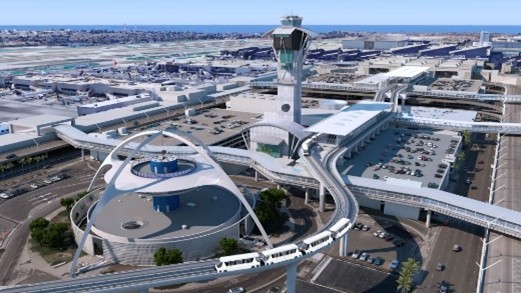
Projects like the LAX Landside Access Modernization Program (LAMP) demonstrate what this looks like in practice. At one of the world’s busiest airports, we are delivering large‑scale transportation and infrastructure upgrades while airport operations, airline activity, and passenger movement continue uninterrupted. Achieving that balance required close coordination between infrastructure delivery and systems integration, allowing new capabilities to be introduced incrementally without disrupting daily operations or the broader aviation mission.
Boson: For federal missions, continuity is not a constraint; it is the operating condition. Modernization must be integrated into ongoing operations, with new capabilities supporting real-world mission needs, not treated as separate technical upgrades. New capabilities must align with how people operate, respond, and make decisions every day.
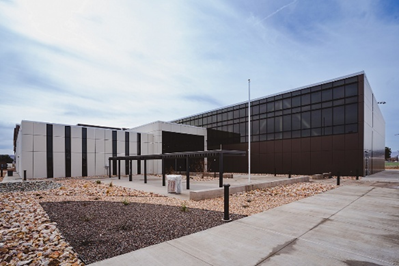
You can see that approach clearly at Naval Air Weapons Station China Lake. Following the 2019 earthquakes, the priority wasn’t just rebuilding damaged facilities but restoring and modernizing a mission‑critical installation while weapons testing, training, and operational activities continued.
Projects like China Lake show that it requires close coordination with operators, disciplined integration of infrastructure and systems, rigorous testing, and a long‑term sustainment mindset. When modernization is treated as part of the mission, not separate from it, infrastructure becomes more resilient, more secure, and better positioned to support operations well into the future.
5. How is aviation infrastructure evolving beyond traditional airport design?
Fialkowski: Airports are evolving into highly connected platforms rather than standalone facilities. Traditional designs, once focused on aircraft movement and passenger flow, are giving way to environments that integrate transportation, energy, technology, and resilience planning.
That shift is evident in projects like the Newark Liberty International Airport Terminal Redevelopment. The program goes beyond building a new terminal to rethinking how passengers move through the airport, how landside infrastructure connects to regional transportation networks, and how the facility supports long‑term operational flexibility. Modernization efforts are focused on improving the passenger experience while also strengthening reliability, security, and adaptability in a complex operating environment.
Modern aviation infrastructure must also respond to changing passenger expectations and operational demands. Terminals are designed for scalability, airside systems are increasingly automated, and landside infrastructure is more tightly integrated with regional transportation and utility networks. Ultimately, airports must function as part of a broader ecosystem, connecting physical assets, digital systems, and communities to support safe, efficient, and adaptable air travel over time.
Boson: Aviation infrastructure is no longer confined to terminals and runways. It is a fully integrated national system connecting physical facilities, digital platforms, and operational decision‑making across the entire airspace. Growth in air traffic, new airspace users, and aging systems are driving modernization well beyond the airport perimeter.
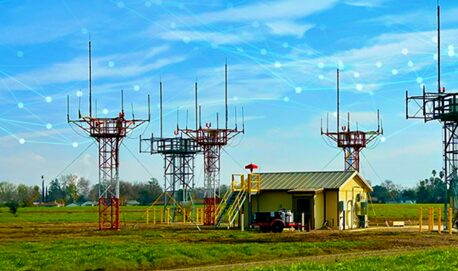
You can see this approach in action with our ongoing partnership with the Federal Aviation Administration through the Technical Support Services Contract (TSSC). With this program, we handle upgrades to infrastructure and systems all across the National Airspace System, including air traffic control facilities, critical communications, navigation, surveillance, and power systems. And we do all of this while airspace operations continue to run smoothly at hundreds of sites nationwide. It takes careful coordination with operators, rigorous integration and acceptance testing, and a focus on long-term sustainment planning to make sure modernization actually boosts performance without disrupting safety or continuity.
6. What are the best practices used to deliver infrastructure projects in challenging environments?
Fialkowski: Best practices in challenging environments focus on resilience, adaptability, and long-term operability. Our work in Puerto Rico has demonstrated that infrastructure must be designed to recover quickly from disruption as much as to endure it. Following repeated natural disasters, successful projects prioritize distributed systems, phased delivery, and designs that balance immediate needs with long-term performance. Another critical practice is aligning infrastructure delivery with local realities. In Puerto Rico, that means coordinating closely with utilities, regulators, and communities while designing systems that can be operated and maintained under constrained conditions. Infrastructure in these environments must be flexible, repairable, and sustainable, recognizing that climate stress and resource limitations are not temporary challenges but defining characteristics of the operating environment
Boson: In federal environments, best practice starts with treating location as a primary design and delivery condition, not a constraint to work around. In places like Guam, where our team provides construction management support for Missile Defense Agency facilities, successful delivery depends on early integration of mission requirements, logistics planning, and environmental compliance. Remote locations require designs that account for limited access, long supply chains, harsh environments, and the need to maintain operations throughout construction. Planning for constructability and material availability from the outset is critical.
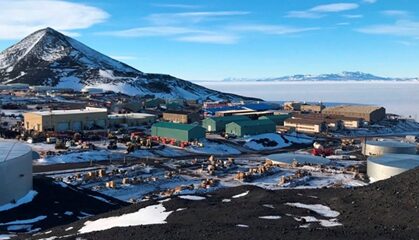
Antarctica extends this discipline even further. Projects there require exhaustive upfront planning, modular and transportable designs, and infrastructure engineered for reliability. Short construction windows and zero tolerance for rework demand precise logistics coordination, extensive pre‑deployment testing, and digital planning tools that reduce uncertainty. These environments reinforce the value of integrated delivery, where infrastructure and systems are planned together from day one.