PTP® Modem: A Complete Space Communications Platform
More than a modem, the PTP Modem combines programmable multi-channel RF performance with the full power of the PTP software. As a result, users can manage waveform control, telemetry and command processing, RF-to-IP transport, recording, playback, and simulation from a single platform.
What Is The PTP Modem And How Does It Work?
The PTP Modem is a space communications system that combines a proven software-defined framework with FPGA-accelerated digital signal processing. As a result, it delivers user-configurable uplink and downlink capabilities from radio frequency (RF)/intermediate frequency (IF) signals into digital internet protocol (IP).
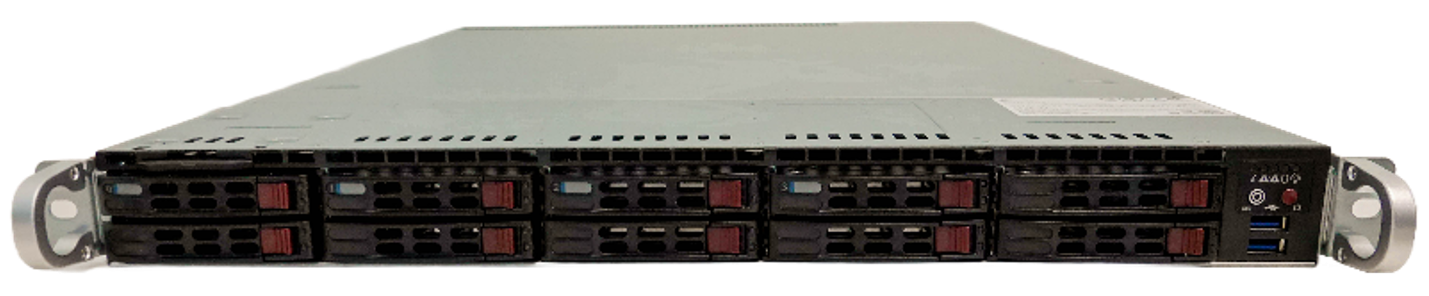
The PTP Modem goes beyond traditional modem functionality by combining programmable, multi-channel RF performance with the full flexibility of PTP software. As a result, it does much more than simply modulate and demodulate signals.
Beyond Traditional Modem Functionality
The PTP Modem's uplink and downlink waveforms are programmable to match mission requirements. Additionally, the underlying PTP architecture allows users to build and reconfigure complete processing chains through a GUI using more than 100 software modules instead of custom code.
As a result, a single system can support RF-to-IP workflows, telemetry and command processing, protocol conversion, encoding and decoding, data-quality monitoring, recording and playback, and simulation functions within one integrated platform.
Furthermore, the PTP Modem supports standards and interfaces such as SGLS, VITA-49 Radio Transport, SLE services, and a wide range of network and serial interfaces. Therefore, it can adapt to changing mission requirements in ways that many fixed-function modems cannot.
How Does PTP Modem Support Telemetry, Tracking, And Commanding (TT&C) For Spacecraft?
The PTP Modem is a multi-channel satellite modem for telemetry, tracking, and command applications. All aspects of the uplink and downlink waveform are programmable to match the requirements of your satellite. Standard modulation and coding options are supported.
How Does The PTP Modem Deliver Data?
Real-Time Telemetry Transport and Virtual Channel Processing
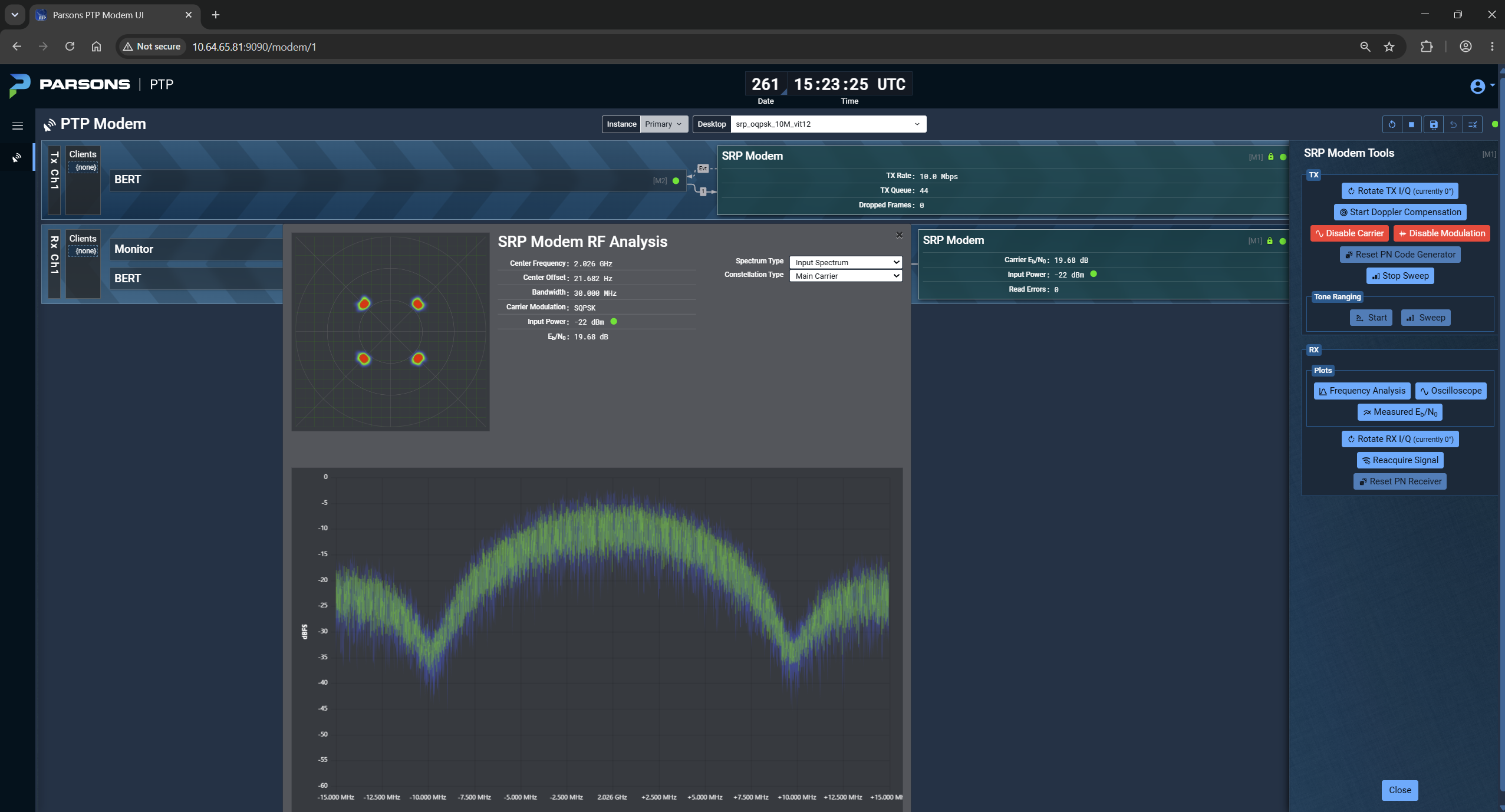
The PTP Modem is fully user-configurable for real-time telemetry transport across IP and baseband interfaces. It combines modem functionality with the flexible, modular PTP software environment. As a result, users can send and receive telemetry data over serial and network connections, including support for RF-to-IP applications through a VITA-49 Radio Transport (VRT) interface.
In addition, configurable virtual channel processing allows operators to filter, route, and distribute data by VCID/VCDU across ports and network connections. This capability helps meet mission-specific data delivery requirements. Furthermore, the system supports data recording and playback from points within the data stream. As needed, selected virtual-channel data can be replayed and delivered to designated users.
Features Of PTP Modem
Product Specifications
Modulator Specifications
Demodulator Specifications
Explore Our Space Communications Products
-

TraCSS: Space Traffic Management
We’re at the forefront of advancing SSA for the NOAA Office of Space Commerce through the innovative TraCSS program.
-

GOCaaS™
The Ground Operations Center as a Service (GOCaaS™) offering is an innovative commercial spacecraft operations center.
-

Signal Conversion Systems
The icCON series of signal converters includes a variety of configurations to satisfy a wide range of signaling requirements.
-

Space Access
We provide Multi-Manifest Flight Systems and launch integration capabilities to operationalize access-to-space for small space vehicle systems.
-

SatFlyer™
SatFlyer™ is a versatile software toolset that provides full-lifecycle flight-dynamics capabilities. It is customizable, scalable and affordable.
-

APS™: Resilient Position, Navigation, And Timing (APNT)
Assured Positioning System (APS™) provides location/navigation information in environments where GPS is unavailable or unreliable.
-

SimHub™
SimHub™ is an open-architecture, commercial product offering a highly customizable, physics-based modeling framework.
-

OrbitXchange™
Through commercial partnerships and proven product expertise, OrbitXchange™ provides resilient satellite communication solutions.
Learn More About The PTP® Modem
Chat with our experts to see learn more about the Programmable Telemetry Processor (PTP®) Modem.
Request Info