Cislunar Space Technical Training And Certification
Cislunar space spans the region between Earth and the Moon, including the orbital regimes, transfer paths, and gravitationally balanced locations that link them. As missions expand beyond low Earth orbit, mastering this environment is essential for safe, resilient, and scalable operations. We offer training to provide a foundation in cislunar education and shift the paradigm from earth-centric thinking to three-dimensional thinking, introducing operators to the concepts necessary to acquire, operate, and instruct on systems and concepts designed for cislunar operations.
Defining Cislunar Space And Why It Matters
What Is Cislunar Space?
Cislunar space encompasses trajectories influenced by both Earth and the Moon out to and around the lunar sphere of influence. It includes Earth–Moon Lagrange points (EML1–EML5), cislunar orbit families such as low lunar orbit (LLO), near-rectilinear halo orbits (NRHO), and distant retrograde orbits (DRO), as well as the trans-lunar injection and return corridors that connect Earth orbit to the Moon. In common usage, cis-lunar and cislunar refer to the Earth–Moon system’s operational volume where multi-body dynamics dominate.
Cislunar is fundamentally different from Earth-centric space operations. Unsurveilled cislunar space leaves the U.S. open to strategic surprise, and without shifting its thought processes to understand it, the U.S. will remain vulnerable.
The Historical Evolution of Three-Dimensional Combat Thinking
A Lesson In History
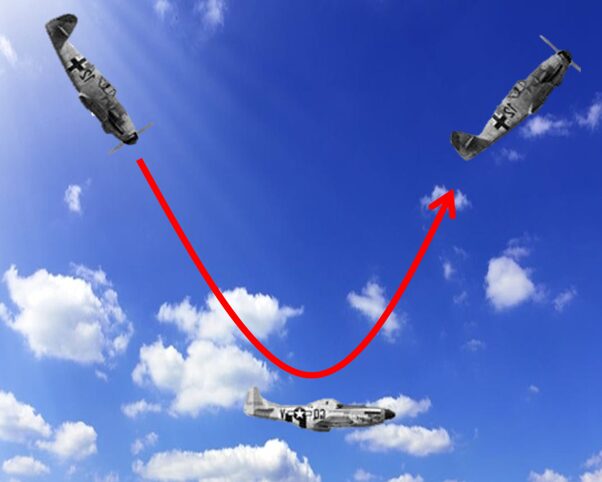
In World War II, pilots refined dogfighting tactics known as “Boom and Zoom,” diving from higher altitude to strike and using momentum to climb for subsequent attacks. This concept is illustrated in Figure 1 (upper left). In 2020, Orson Scott Card described how the Battle School and zero-gravity Battle Room in “Ender’s Game” drew from pilots’ struggle to think in three dimensions; new threats arrive from above, below, and behind—angles drivers rarely consider.
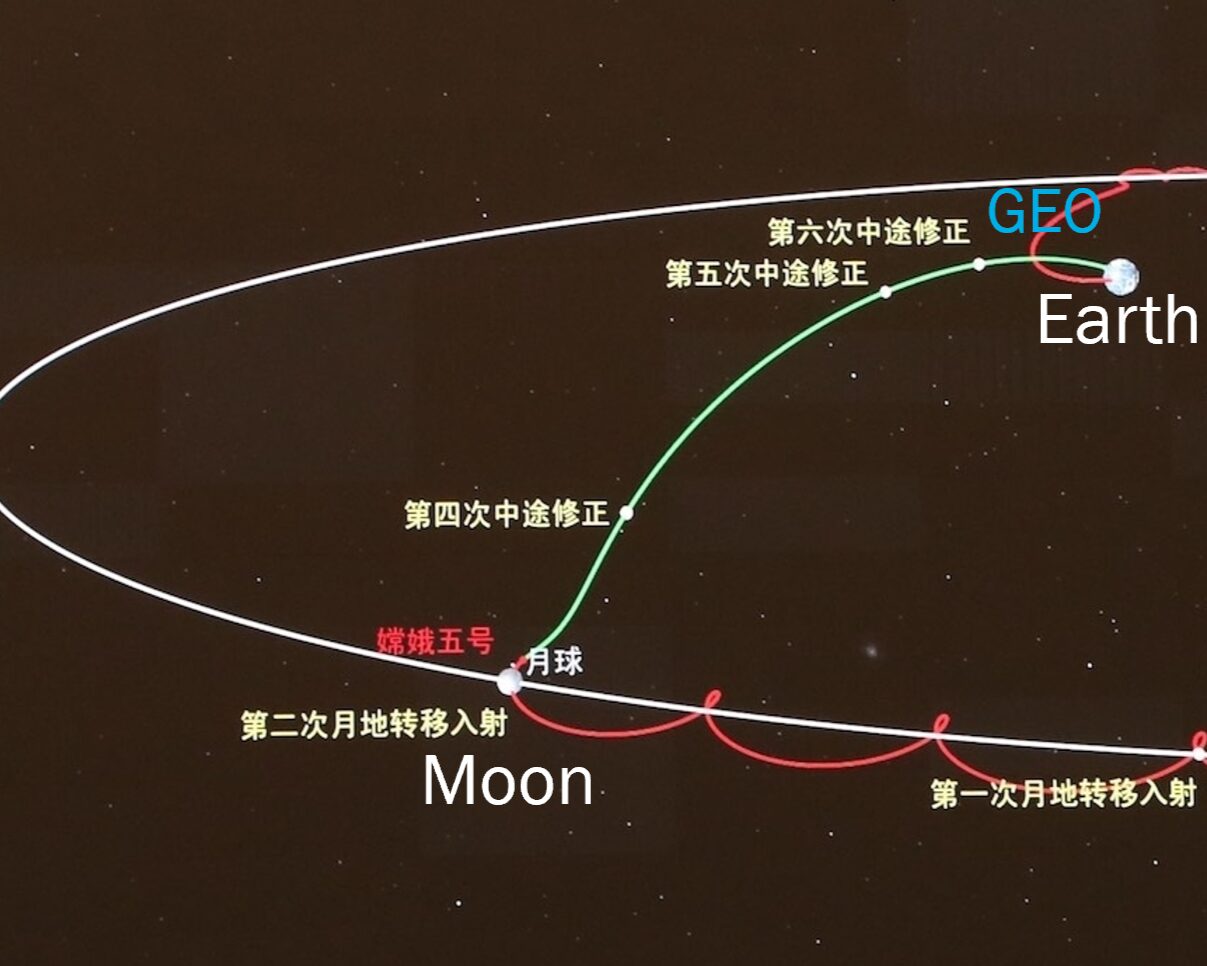
A similar shift is now required in cislunar space. Routine geosynchronous operations consider left, right, and Earth-origin threats, but activity in, to, and through cislunar orbit introduces vectors from lunar proximity, including potential direct descent anti-satellite approaches from unexpected angles. Figure 2 (upper right), from China’s Chang’e 5 mission, illustrates this paradigm change.
Geosynchronous orbit has become an artificial mental boundary for many operators, terms like “graveyard belt” and “deep space” reinforce the idea that useful activity ends there. Without a shift to three‑dimensional thinking, the United States and allies risk strategic surprise from emerging threat vectors originating at or near the Moon, particularly as cislunar space activity and cislunar orbit traffic increase.
Why Train For Cislunar Operations?
Unmonitored cislunar space poses risk of strategic surprise for U.S. national security and the existing space domain awareness (SDA) enterprise is largely earth-centric. Cislunar space is not merely a larger version of geosynchronous orbit, it is a distinct region with its own orbital mechanics, strategic importance, and operational challenges. The Foundational Cislunar Education course introduces participants to the unique dynamics of cislunar space with the intent to shift perspective from earth-centric thinking to the three-dimensional, three-body framework required for operations in the earth-moon system. Cislunar space represents the next frontier in space exploration, infrastructure development, commercial enterprise, national security, and geopolitical competition. Understanding its environment is critical for ensuring the U.S. and its allies are prepared to lead in this rapidly evolving domain.
The Foundational Cislunar Education course covers key topics such as the orbital mechanics of the earth-moon system, the strategic significance of the Lagrange points, lighting and distance considerations, sensing phenomenologies, and the advantages and limitations of common lunar trajectories and orbits.
Whether a new space operator, analyst, or experienced professional seeking a refresher, this course provides the tools to navigate the challenges and opportunities of this critical and emergent domain. Participants will leave with a solid grasp of foundational concepts and emerging strategic considerations necessary to avoid risks and surprise and capitalize on opportunities in cislunar space which is the necessary knowledge to acquire, operate, and instruct on systems designed for operations in, to, and from cislunar space.
Explore Our Foundational Cislunar Education And Training
Our Foundational Cislunar Education equips operators to move beyond Earth‑centric assumptions, embrace astronomy‑informed principles, and master concepts required to acquire, operate, and instruct systems designed for cislunar missions. The curriculum builds the mindset and skills needed to recognize and respond to novel vectors, trajectories, and operational risks across the Earth–Moon system, providing clear cislunar meaning for government, industry, and lunar companies.
Course Instructor: Mr. Jonathan Z. Smith
Mr. Jonathan Z. Smith is the course designer and lead instructor of the Parsons Foundational Cislunar Education course. He is a retired Lieutenant Colonel who served in both the U.S. Air Force and U.S. Space Force.
His penultimate assignment was as the first commander of the 19th Space Defense Squadron, where he was tasked, among other missions, with developing a repeatable cislunar surveillance capability. In this capacity, he quickly realized his training, education, and mission systems were earth-centric and inadequate for addressing cislunar missions. He quickly shifted his mindset from earth-based thinking to one of astronomy-informed principles and achieved consistent, repeatable success. He was asked to brief his well-received, paradigm-shifting findings to the following:
- The Secretary of the Air Force.
- The Chief and Vice Chief of Space Operations.
- The Commanders of U.S. Space Command, Space Operations Command (now Combined Forces Command), Space Systems Command, and Space Training and Readiness Command.
- The Chief Scientists of the Air Force, Space Force, Space Operations Command, and Space Systems Command.
- Senior civilian and military leaders within headquarters of the Office of the Secretary of Defense, the Joint Staff, the Office of Secretary of the Air Force, the U.S. Naval Observatory, the Air Force Research Laboratory, and NASA.
Awards & Recognition
Mr. Smith received several awards for his forward-thinking research and leadership, including U.S. Space Command’s Innovation Team of the Year (2022) and the Satellite Industry Association’s Award for Leadership in Government (2024). He was invited to share his experience as a guest speaker and panelist at the following:
- Johns-Hopkins University Applied Physics Laboratory.
- NASA’s Jet Propulsion Laboratory and Planetary Defense Coordination Office.
- Air Force Research Laboratory’s conferences on Cislunar Surveillance and Space Domain Awareness.
- The Chief Scientist of the Space Force’s “Showcase for Commerce” and the Air Force Office of Scientific Research’s “Algorithms to Operations”, which both highlighted operational needs to commercial industry and academia.
Dive Deeper: Explore Our Space Solutions And Capabilities
Space Access
We provide Multi-Manifest Flight Systems and launch integration capabilities to operationalize access-to-space for small space vehicle systems.
Space Solutions
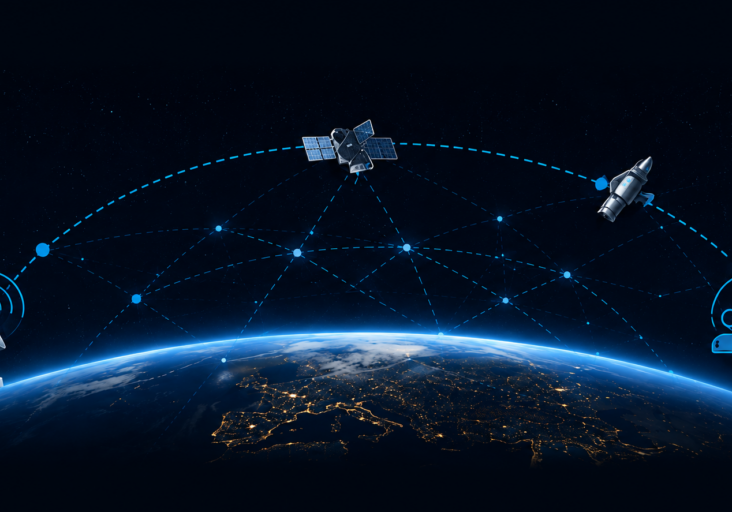
Explore our history in launch logistics, ground control, satellite operations, assured positioning, navigation, and timing (PNT), domain awareness, and geospatial intelligence.

TraCSS: Space Traffic Management
We’re at the forefront of advancing SSA for the NOAA Office of Space Commerce through the innovative TraCSS program.
Ace CtrlPoint™: Satellite Control Software
Ace CtrlPoint™ is an automated space vehicle and ground station command and control (C2) application.

Merlin™: Spectrum Battlespace Software For Multi-Domain
Merlin is a software suite designed to empower military and defense operations with situational awareness and decision support.

AceFCT™: Space Vehicle And Satellite Communication System
AceFCT™ communicates with an accredited space vehicle before launch.