Air Force Strategy: Five Critical Objectives Defined At AFA’s Air, Space, and Cyber Conference
Estimated reading time: 4 minutes
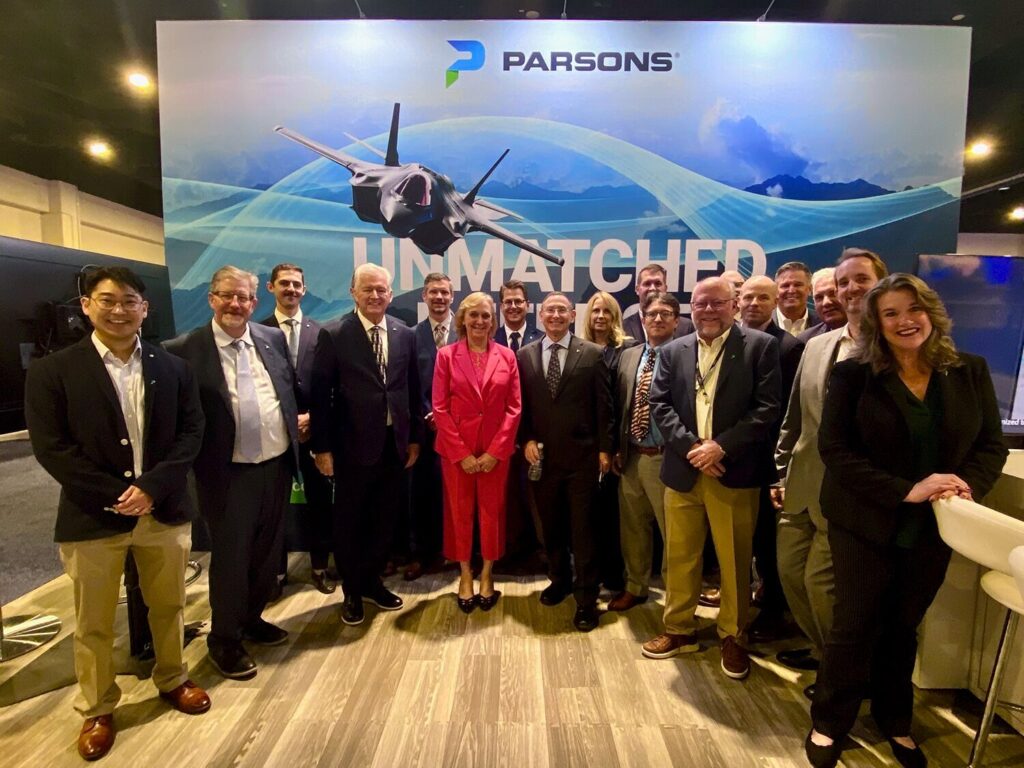
Recently, I had the privilege of attending the Air Force Association’s (AFA) Air, Space, and Cyber Conference at beautiful National Harbor, MD. Parsons demonstrated many of our capabilities to senior leaders of the United States Air Force (USAF), and we had the opportunity to talk with customers about future program engagement. Our presence this year built on last year’s efforts to further introduce Parsons as a provider of unmatched defense solutions.
Here are five strategic objectives highlighted at AFA that are vital to our national security:
1. Ensure combat readiness in air, space, and cyberspace.
It is critical to fully fund programs to ensure Department of the Air Force personnel are the world’s most ready, capable, and effective Air and Space Forces. They must have the instruction, training hours, tools and equipment, weapons, and fuel and other logistics support systems to meet all aspects of the National Defense Strategy (NDS).
2. Define and articulate requirements for the Department of the Air Force to execute the NDS.
To successfully execute the NDS, the force size, systems, and weapons required for air, space, and cyberspace must be clear. Joint warfighting requirements established by the Combatant Commands must also be unconstrained by budget restrictions.
3. Recapitalize and modernize the Air and Space Forces.
Today’s Air Force is the smallest and oldest it has ever been. Our nascent Space Force lacks the scale to ensure continuous operations in the face of growing threats. The nation must invest in these two branches of the Department of the Air Force to ensure their modernization and resilience when challenged. To do so, 30 years of underfunding relative to the Departments of the Army and Navy must end. We must ensure investment commensurate with the requirements for air and space superiority.
4. Invest in and develop advanced technologies to ensure Air and Space resilience and superiority in the future.
The U.S. must invest in new weapons, systems, and capabilities to deter and, when necessary, defeat adversaries that threaten our national interests and allies. We must likewise continue to develop and field the most promising advanced technologies in pursuit of air and space superiority. This will ensure the technological advantage and overmatch necessary to deter war.
5. Invest in and support our people, our most valuable asset.
We must support airmen, guardians, and their families, recognizing their unique contributions to U.S. national security. Additionally, we must treat retirees and veterans with the dignity and respect their service and sacrifices deserve. We must also build the skilled and talented civilian workforce needed to support our warfighters in all their endeavors. This can be achieved through public and STEM education and core scientific research programs.
Advancing The Air Force Mission
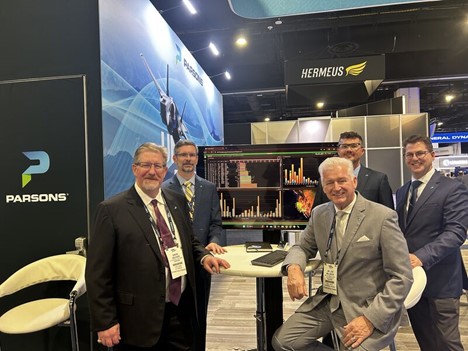
At AFA, the team and I showcased the tremendous capabilities Parsons provides to USAF. We also shared innovations for future work to continue advancing the air force mission. Our booth highlighted the company’s work in combined joint all-domain command and control (JADC2). We presented our C2 tools developed for operators by operators to be used across multiple domains (C2Core®), a program that attracted tremendous interest. We also had great visibility showcasing biometrics, CUAS and CsUAS, and our cyber solution ENVE. Lastly, our Assured Positioning System (APS/APNT) positions navigation and timing information in environments where GPS is unavailable or unreliable.