Guiding The Crowd: How We Design Wayfinding Systems
Estimated reading time: 5 minutes
Key Takeaways
- Clear wayfinding is crucial during global events like the Olympics and FIFA World Cup to reduce confusion and enhance safety.
- Our team designs integrated wayfinding systems that ensure smooth navigation in complex environments.
- We focus on accessibility, multilingual clarity, and real-time adaptability to meet diverse user needs.
- Wayfinding supports crowd control and visitor experience, combining signage with transportation planning.
- Our solutions contribute to long-term urban navigation improvements and can be repurposed after events.
When millions of people arrive for a global event like the Olympics or the FIFA World Cup, clear direction becomes just as important as transportation or security. Visitors need to navigate unfamiliar venues, transportation hubs, and city centers, often in multiple languages, under time pressure, and amid crowds. Confusion can cause delays, frustration, and safety concerns.
Our team helps cities, venue operators, and event planners design and implement signage and wayfinding systems that do more than point the way. We create seamless navigation experiences that move people smoothly, safely, and confidently across complex environments.
The Art And Science Of Wayfinding
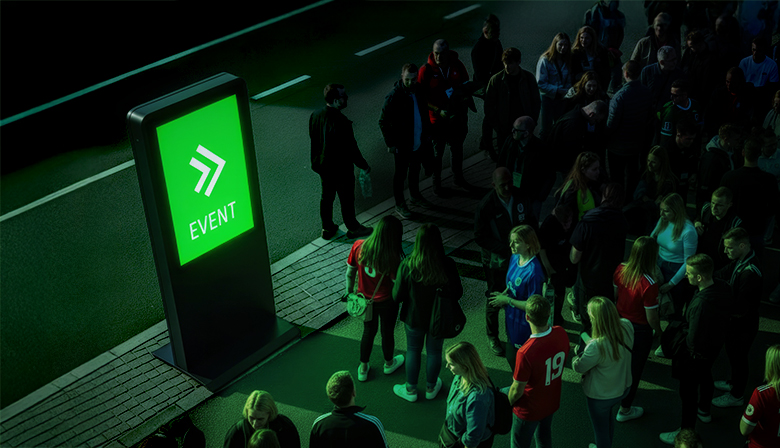
Wayfinding is about more than signage. It is a system of visual, spatial, and digital cues that help people understand where they are, where they need to go, and how to get there. For major global events, this includes static signs, digital displays, ground markings, maps, mobile navigation tools, and audio announcements.
We have brought decades of experience designing integrated wayfinding systems for transit systems, airports, stadiums, and urban corridors. We understand how signage affects flow, perception, and safety, especially when venues are under peak load.
Trusted For Crowd-Centric Solutions
We have helped airports move tens of millions of passengers per year, designed signage for entire city transit systems, and implemented dynamic wayfinding tools at major international events. At the 2022 FIFA World Cup, we supported crowd movement across temporary and permanent infrastructure, guiding fans, staff, and vehicles through venues and transit zones.
We focus on accessibility, multilingual clarity, cultural considerations, and real-time adaptability. Every solution is tailored to the event, location, and users on the ground.
Three Ways We Deliver Smarter Wayfinding
Integrated Signage Systems
We have developed signage plans that span both indoor and outdoor environments. This includes fixed and modular signs, color-coded route indicators, and visual icons that help reduce dependency on language. Our systems connect across stadiums, metro systems, fan zones, and transportation hubs for a unified experience.
Digital and Adaptive Wayfinding
We design and deploy digital signage networks that update in real time. This allows event organizers to redirect traffic, announce service changes, or respond to emergencies. Digital displays can integrate with crowd modeling systems to help reduce congestion or guide people to less crowded entrances or exits.
Human-Centered Design
We apply principles of visual hierarchy, contrast, legibility, and intuitive mapping. Every element is tested to ensure it can be understood quickly by diverse users, including non-native speakers, people with disabilities, and those navigating in high-stress environments.
Movement, Not Just Messaging
The true purpose of wayfinding is to keep people moving. During global events, wayfinding supports crowd control, security, and the visitor experience. Poor signage leads to gridlock. Smart wayfinding relieves it.
We combine signage design with transportation planning, pedestrian flow modeling, and event simulation. This holistic approach ensures that every sign supports a larger mobility and safety strategy.
We design for:
- Stadiums and arenas
- Fan zones and public viewing areas
- Metro and transit corridors
- Temporary structures and parking facilities
- Airports and arrival gateways
We also provide operational support before and during the event to monitor how systems are functioning and make adjustments in real time.
A Legacy That Lasts
Although signage for major events often includes temporary elements, many components become part of a city’s long-term infrastructure. Our team designs wayfinding systems that can be scaled down and repurposed after the event ends.
Cities gain:
- Updated signage standards
- Multilingual and ADA-compliant templates
- Digital infrastructure that can support future events
- Permanent improvements to visitor experience and urban navigation
A Collaborative Approach
We work closely with local planners, graphic designers, transit operators, architects, and emergency services to create signage systems that meet operational and regulatory needs. We integrate with branding guidelines, cultural protocols, and international accessibility standards to ensure consistency and effectiveness.
Our teams support:
- System-wide signage audits
- Master signage plans and event overlay design
- Procurement and fabrication oversight
- Installation logistics and schedule coordination
- Testing and rapid feedback loops
Ready to Guide the World
Wayfinding may not be the first thing people notice, but it is one of the most important factors in shaping their event experience. We help ensure that every step, from the airport to the venue gate, feels intuitive, welcoming, and well-organized.
Whether it is guiding fans to their seats, staff to secure zones, or visitors through a new city, we design systems that keep people informed and moving. For global events with global audiences, our team delivers clarity at scale.
We are ready to help cities host the world with confidence, one sign at a time.