Supporting The Department of War’s (DoW) Defense Acquisition Strategy By Advancing AI
Estimated reading time: 7 minutes
Embracing Changes In Defense Acquisition
Recent updates in defense acquisition are driving procurement toward faster, more flexible approaches for software, digital systems, and emerging technologies. The emphasis is on rapid prototyping, continuous delivery, and modular, interoperable solutions. In addition, there is a broader use of commercial and nontraditional vendors. This avoids closed approaches that limit integration and competition.
For AI, policy trends call for stronger data governance, rigorous testing, transparency, reliability, bias mitigation, and human oversight. The Chief Digital and Artificial Intelligence Office, created in 2022, states that its mission is “advancing deterrence” and “beating bureaucracy.” It also aims to rapidly harness advanced private-sector AI and adapt these tools for the defense environment.1
In practice, AI procurement is increasingly treated as a full-lifecycle effort. It spans acquisition, validation, risk management, long-term sustainment, and the agility to insert new capabilities as they mature.
PALADIN Lab AI Summit
We are aligned with this evolution through adaptive integration methods. Additionally, we offer deep RDT&E experience and strong ties across the commercial technology ecosystem.
Through the PALADIN Lab, we give teams a practical venue to evaluate, experiment with, and integrate emerging AI in a mission-focused setting. At the same time, we broaden access to nontraditional commercial partners.
Our recent AI Summit brought together stakeholders, innovators, and integrators. The event accelerated understanding of available technologies, informed requirements, and enabled flexible adoption pathways for AI-enabled capabilities.
By partnering with commercial providers, we demonstrated how commercial tech can be adapted for mission-relevant defense use cases when paired with an experienced systems integrator. Rather than showing tools in isolation, vendors aligned demonstrations to operational needs and problem sets. As a result, capabilities became directly applicable to government requirements. In several cases, commercial demos were coordinated with our demonstrations.
This showed how emerging technologies integrate into broader workflows and technical environments. The outcome underscored the value of collaboration: commercial partners delivered innovative solutions. We provided mission context, integration expertise, and operational framing to make those solutions meaningful.
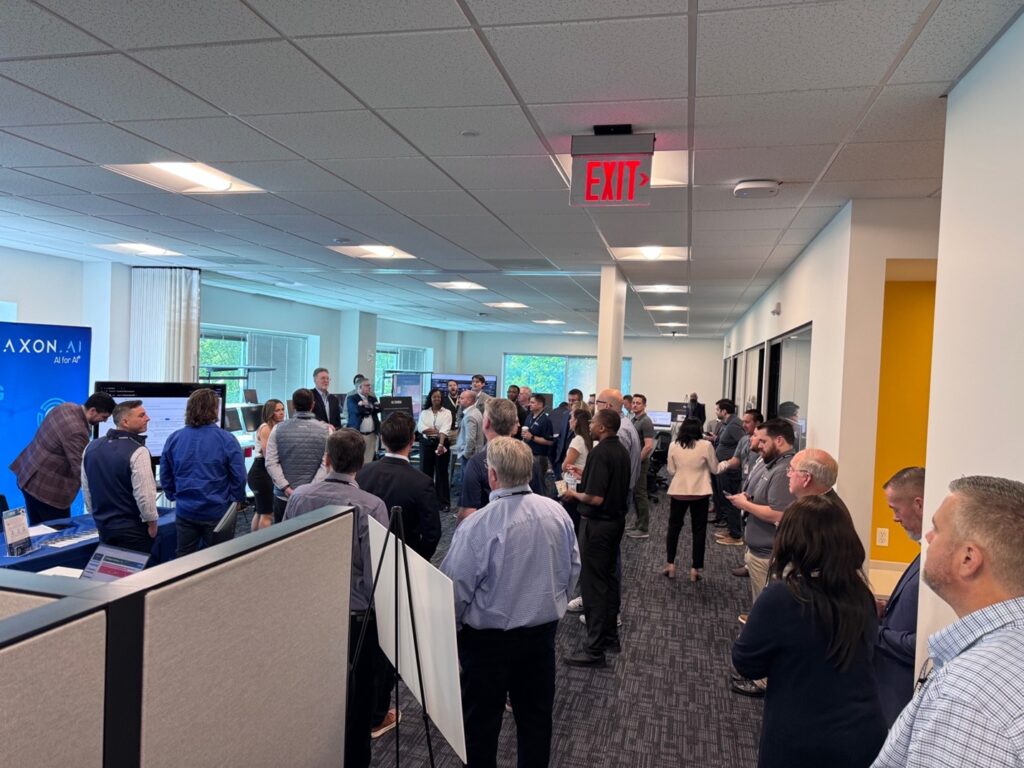
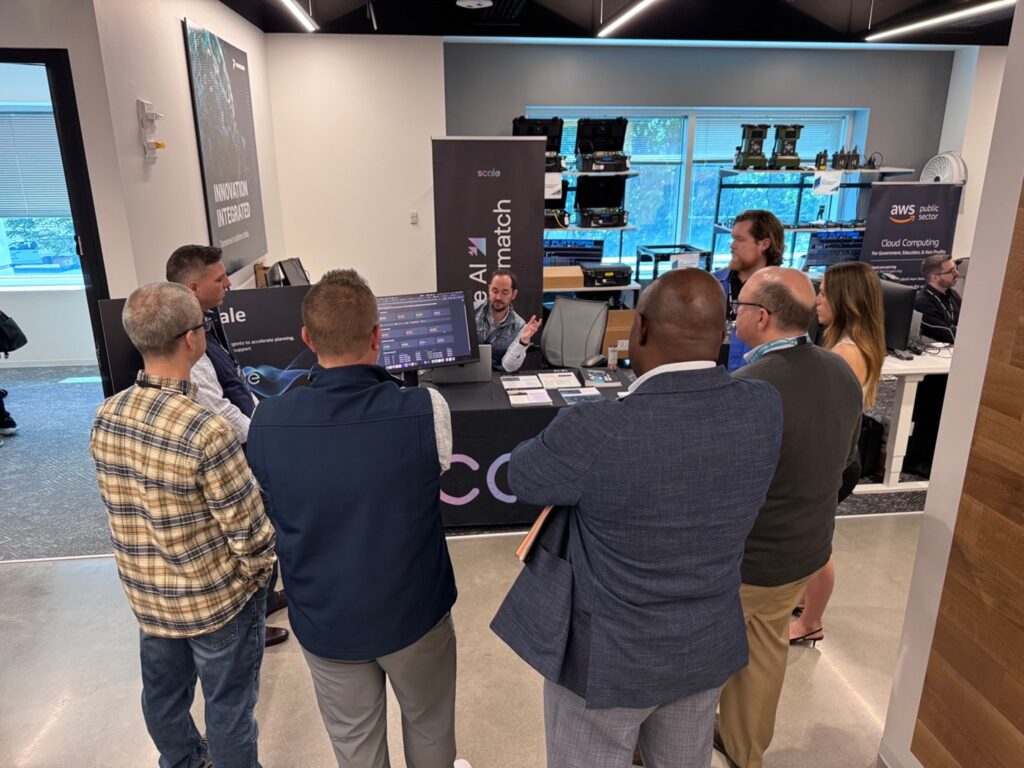
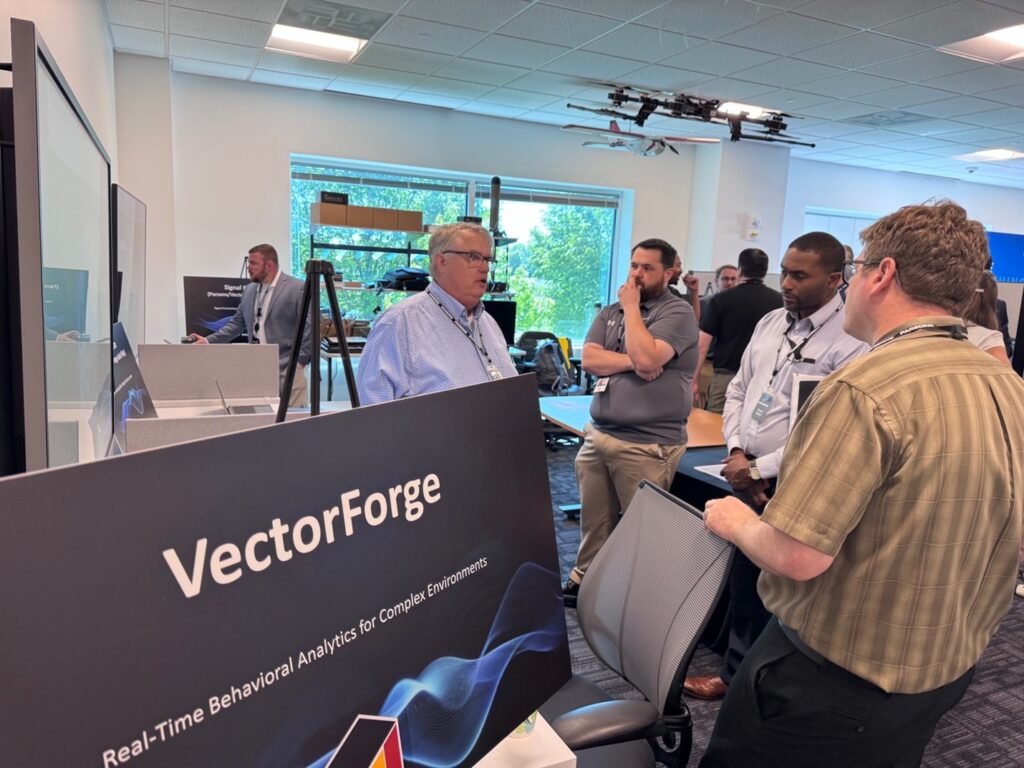
Our recently hosted summit showcased emerging technologies in a technical exchange open house at our Aberdeen Proving Ground (APG), Maryland-based PALADIN Lab on May 5, 2026. Our teams and seven industry partners demonstrated emerging capabilities, including advanced ISR, Edge AI, Spectrum Dominance, and Space Situational Awareness applications. These capabilities were shown to leaders and engineers from the APG C5ISR community.
The open-house format enabled extensive technical conversations that participants identified as highly relevant and valuable to their mission. This event was the latest in our Tech Demo Series. It accelerates development and delivery of emerging technologies in support of the Army’s C5ISR mission.
What Is the PALADIN Lab?
Designed to foster new technologies and capabilities for the warfighter, the PALADIN Lab is owned and operated by us. It is located on Aberdeen Proving Ground, MD. From here, this innovation incubator connects industry, academia, and the Department of War. Therefore, it enables our customers and us to leverage imaginative people and open, available technology to address the DoW’s toughest challenges.
The PALADIN Lab Approach
The PALADIN Lab provides a low-risk venue for government and industry to collaborate on prototypes, emerging hardware, algorithms, and software within existing government architectures. This approach helps decision-makers quickly determine which commercial capabilities to pursue. It also clarifies which technologies do not translate well to mission requirements.
Featured Parsons Demos
- SPIKE-AI – Neuromorphic Accelerators enable rapid AI expansion of existing platforms and capabilities on the edge
- Operator-X – AI assistant using LLM technologies within DCO tools
- AVAA – Advanced Video Activity Analytics at scale
- SignalKingdom – Signal Processing AI/ML, linking RF activity to context
- DigitalSentry – A passive, distributed sensing and correlation capability for sensitive facilities
- CAPE – Collaborative AI for Predicting ECOA
- AI DMM – AI for Dynamic Mission Management
- SAINT – Satellite Anomaly AI Predictor Utilizing Telemetry
- ASCO – Interactive AI Agent-based tool for satellite collection orchestration
Featured Partners
- AWS: Secure, reliable, and compliant cloud services to bring mission capabilities to bear
- Scale: Agentic Planning & Analysis
- C3 AI: C3 AI Intel Fusion
- VectorForge: Real-Time Behavioral Analytics for Complex Environments
- Jaxon: Neurosymbolic AI for Verified Intelligence
- SwRI: Advanced RF Sensing for Low Latency Characterization
- IBM Consulting: CXEdge – AI enabled sensor integration and data management at the tactical edge
- IBM Technology: IBM watsonx solutions designed to create end-to-end secure, and domain specific AI environments for the DoW






What’s Next?
Looking ahead, we will continue expanding our Tech Demo Series and collaboration opportunities at the PALADIN Lab to shorten the path from concept to capability. If you are a program office, mission owner, or technology provider interested in co-developing, evaluating, or integrating AI-enabled solutions, contact our team to schedule a visit to APG or propose a joint demonstration. Together, we can accelerate the development of trustworthy, interoperable capabilities. These capabilities deliver a decisive advantage to the warfighter.
Together, we can accelerate the development of trustworthy, interoperable capabilities that deliver a decisive advantage to the warfighter.
About The Author
- https://www.ai.mil/About/Organization/ ↩︎