Redefining Hospitality: Saudi Arabia’s Green Revolution
Estimated reading time: 4 minutes
Saudi Arabia is redefining the hospitality and tourism sector in line with Saudi Arabia’s National Vision 2030. I’m lucky to be witnessing this transformation in real time. The Kingdom is positioning itself as a pioneer in sustainable hospitality. Here, AI joins architecture, history and tradition to shape the future of tourism across the region.
Embedding Sustainability: The New Standard
Mega- and giga-projects such as The Line, Qiddiya, Diriyah and Soudah Peaks are not only redefining luxury and diversifying the economy. They are also embedding sustainability as a core, non-negotiable principle. This cultural and environmental shift can be seen not only in Saudi Arabia, but throughout the Middle East. More and more projects are adopting passive cooling techniques, mudbrick insulation, modernizing irrigation systems and more.
What’s unfolding is a full-bodied recalibration of what it means to be hospitable in a climate-compromised world.
Predictive analytics are being used to monitor and reduce water waste in remote resort developments. Meanwhile, at NEOM, AI is already optimizing the energy use of entire hospitality zones. Whether through regenerative building materials, climate-adaptive design, or the use of advanced data systems, the region is rapidly evolving its approach to luxury tourism projects.
Tune In For More
Industry conversations, such as those featured on our latest episode of Meet the Mission and Hospitality Design’s What I’ve Learned podcast, echo this shift. The industry’s new rhythm is digital, immediate, and data-driven.
In a region facing rising temperatures, desertification, and water scarcity, the response is bold and rooted in long-term resilience: build carbon-friendly cities, regenerate coastlines, and cultivate local natural resources like the sun and sea to power future-forward tourism.
Building Sustainably
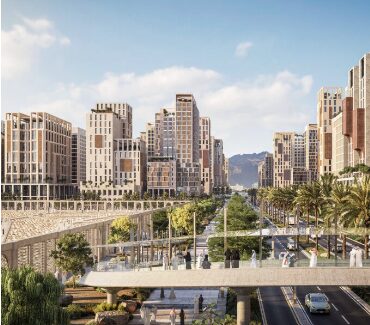
At Parsons, we pride ourselves on delivering projects in the most sustainable way possible. For example, Lusail City in Qatar is a new urban district. It weaves together green infrastructure, smart mobility, and energy-efficient design, all tailored to the realities of Gulf urban life. In Saudi Arabia, our Rua Al-Madinah project emphasizes sustainability. It does this through the creation of extensive green spaces and improved transportation infrastructure. This enhances the cultural and historical heritage of the area while accommodating millions of Muslim pilgrims.

The King Abdullah Financial District (KAFD) is the Kingdom’s first vertical city. It embodies the concept of a 10-minute city and is designed to address the complexities of urban expansion. We’re supporting the delivery of this premier mixed-use destination. It has received the LEED ND (Neighborhood Development) Stage 2 Platinum certification from the U.S Green Building Council (USGBC). Soudah Peaks is a year-round luxury mountain tourism destination set 3,015 meters above sea level on Saudi Arabia’s highest peak. It is dedicated to building sustainable tourism infrastructure. The destination focuses on nature, wellness, adventure, sports, culture and heritage.
Together, these projects reflect a growing regional understanding: that sustainability cannot be an afterthought. It must be the lens through which all future hospitality is designed and delivered. This movement is centered around creating something authentic, rooted in local landscapes, materials, and traditions.
The message is clear: the hospitality sector in the Gulf is no longer defined solely by luxury. It is being redefined by innovation, technology, resilience, and authenticity.
As we shape the next generation of destinations, we are not just building spaces for guests. Instead, we are building frameworks for how the world will experience our region, our values, and our future.