Building More Than Airports: Creating Workforce Opportunities And Stronger Communities

Estimated reading time: 5 minutes
Infrastructure Investments That Create Lasting Community Value
Airport expansion and modernization programs are often measured by tangible outcomes: new terminals, expanded gates, improved passenger experiences, and increased capacity. While these investments are critical to support growing demand, the most successful airport megaprojects create value far beyond the airport fence line.
According to Airports Council International–North America, U.S. commercial airports support approximately 12.8 million jobs, generate $619 billion in annual payroll, and contribute $1.8 trillion to the U.S. economy every year. As public agencies and airport authorities forecast $173.9 billion in infrastructure improvements over the next five years, owners have a unique opportunity to ensure these investments deliver lasting benefits for the communities they serve.
When approached strategically, airport megaprojects can become catalysts for workforce development, economic inclusion, and community prosperity while still achieving critical program objectives.
Airports as Economic Drivers
Few infrastructure investments shape regional economies like airports. They connect communities to global markets, support tourism and commerce, and move people and goods efficiently.
Major capital programs multiply that impact by supporting construction jobs, creating opportunities for local businesses, and driving demand across engineering, construction, manufacturing, transportation, hospitality, and professional services.
Today, forward-thinking airport owners are looking beyond traditional economic metrics and asking a broader question: How can this investment create opportunities for the people who live and work in our communities?
The answer increasingly lies in integrating workforce development and community benefits into project planning from the outset.
Creating Pathways to Opportunity
Workforce availability is one of the infrastructure industry’s greatest challenges, as agencies, contractors, and owners compete for skilled labor to deliver unprecedented investment.
Airport programs can help address this need by creating pathways into high-demand careers. Through partnerships with schools, community colleges, workforce organizations, trade unions, and community groups, airport owners can connect residents to training, apprenticeships, and project-based career opportunities. These initiatives help meet immediate labor needs while building the next generation of engineers, project managers, trade laborers, equipment operators, technology specialists, and construction professionals. For communities, they create access to stable careers, upward mobility, and long-term employment beyond a single project.
The Power of Community Benefit Programs
Many airport owners are also implementing targeted community benefit initiatives designed to ensure that the economic value generated by major projects is shared broadly across the region.
These programs may include:
- Local hiring initiatives
- Small business participation goals
- Workforce training partnerships
- Educational outreach efforts
- Career awareness and mentorship programs
By aligning project delivery with community priorities, airport authorities can strengthen stakeholder relationships, increase public support, and create measurable social and economic outcomes.
Just as importantly, these programs help demonstrate accountability to local citizens, elected officials, and community leaders seeking tangible benefits from public infrastructure investments.
Lessons from Nationwide Airport Programs
Major airport programs across the country show how workforce readiness, local business engagement, and community outreach can strengthen project outcomes while creating lasting regional value.
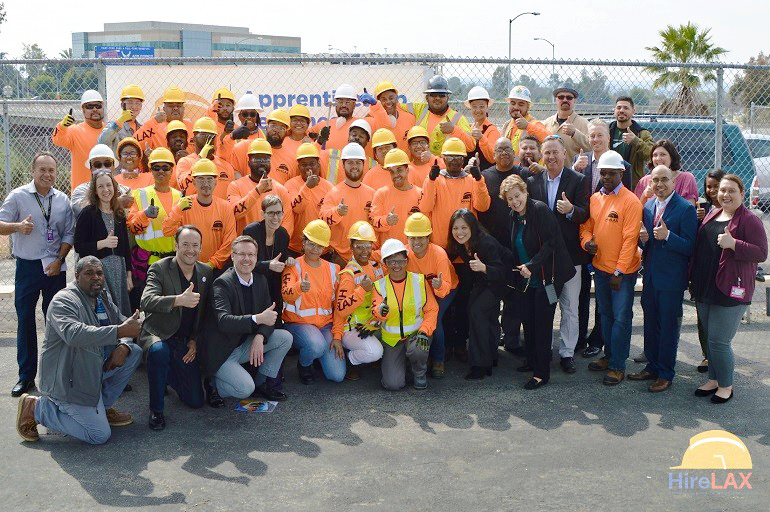
The Los Angeles World Airports’ (LAWA’s) HireLAX Apprenticeship Readiness Program is one example. This award-winning, Parsons-designed and managed program is a collaboration among LAWA, Los Angeles Southwest College, nonprofits, unions, and local contractors. Created to support LAX’s multibillion-dollar modernization initiative, HireLAX connects local job seekers to training, apprenticeships, and construction careers.
Since its launch, HireLAX has helped 683 local residents start construction careers and graduated more than 500 students, who have contributed more than 436,000 work hours on infrastructure projects across Southern California. Today, more than 80 graduates are working on active capital improvement projects at LAX, earning salaries exceeding a combined $15 million.
Programs like HireLAX illustrate how success is increasingly measured not only by schedule and budget performance, but by the talent pipelines, economic opportunities, and lasting community value a project creates.
Technology’s Role in Workforce Development
Technology is also reshaping how airport projects approach workforce development. Digital project delivery, advanced construction technologies, data analytics, cybersecurity, smart infrastructure systems, automation, and emerging aviation technologies are driving demand for new skill sets across the industry.
As airports become more connected and technologically sophisticated, workforce initiatives must evolve to prepare workers for these environments. This creates opportunities to expand training programs beyond traditional construction trades and into areas such as:
- Digital engineering
- Data analytics
- Building information modeling (BIM)
- Systems integration
- Cybersecurity
- Airport technology operations
- Advanced transportation systems
By embracing these emerging disciplines, airport programs can help develop a workforce prepared for the future of infrastructure.
Why This Matters for Airport Owners
Airport leaders today face increasing expectations to deliver more than operational improvements. Communities and stakeholders want projects that create jobs, support local businesses, develop future talent, and generate measurable community benefits.
The airports that successfully align infrastructure investment with workforce and economic development goals will be better positioned to build public trust, strengthen regional partnerships, and maximize the long-term value of their capital programs.
Because ultimately, the most impactful airport projects don’t simply move people—they help move communities forward.