The CUAS Gap Isn’t Capability – It’s Integration

Estimated reading time: 7 minutes
After decades of working in air defense, including counter unmanned aircraft systems (CUAS), we’ve learned that defending against modern drone threats is not about individual components. It is about how well those components function together as a system under pressure.
That’s because the threat itself has evolved. Small, low‑cost drones are now used far beyond traditional combat environments, targeting infrastructure critical to national security, economic stability, and everyday operations. In this environment, a drone does not need to be sophisticated to be effective. It only needs to reach its target. This is a scenario we have seen play out in contested environments, where adversaries adapt quickly and exploit gaps in defensive systems.
CUAS Is A System Problem, Not A Point Solution
This reality forces a shift in how we think about CUAS. Protecting critical infrastructure may include point defense, but it’s not only a point solution. It’s a system‑level problem that requires a system‑level response.
One of the most consistent gaps we see is the attempt to solve CUAS with disconnected tools. Detection works. Tracking works. Mitigation exists. But when those elements are not fully integrated, the system struggles under operational pressure. Operators are left managing multiple inputs that don’t align. Decisions slow down when they need to accelerate. Response options exist but aren’t coordinated in a way that supports mission success.
Parsons approaches CUAS differently. We engineer layered systems that integrate sensing, command and control, and response into a unified architecture. Our CUAS command and control (C2) framework, DroneArmor™, connects detection, decision‑making, and action into a single capability, while also enabling autonomous and semi-autonomous operations across the system. By leveraging AI/ML-driven automation, DroneArmor can dynamically manage sensor tasking, support rapid threat classification, and assist in coordinating responses, reducing operator burden while maintaining human oversight. This combination of integration and autonomy enables consistent, timely responses in complex, high-tempo environments.
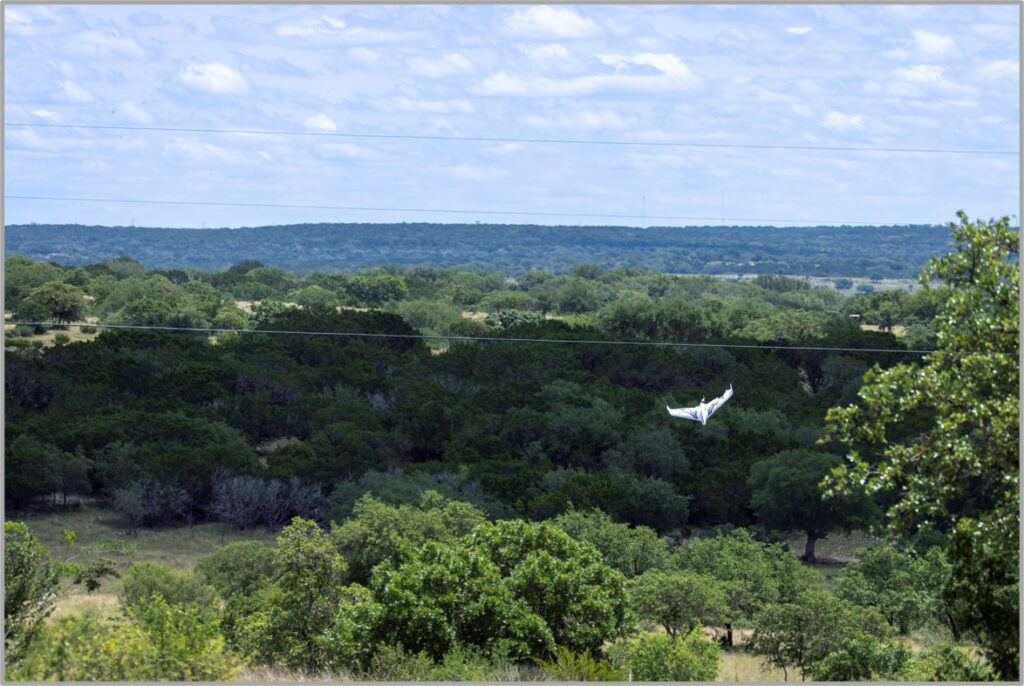
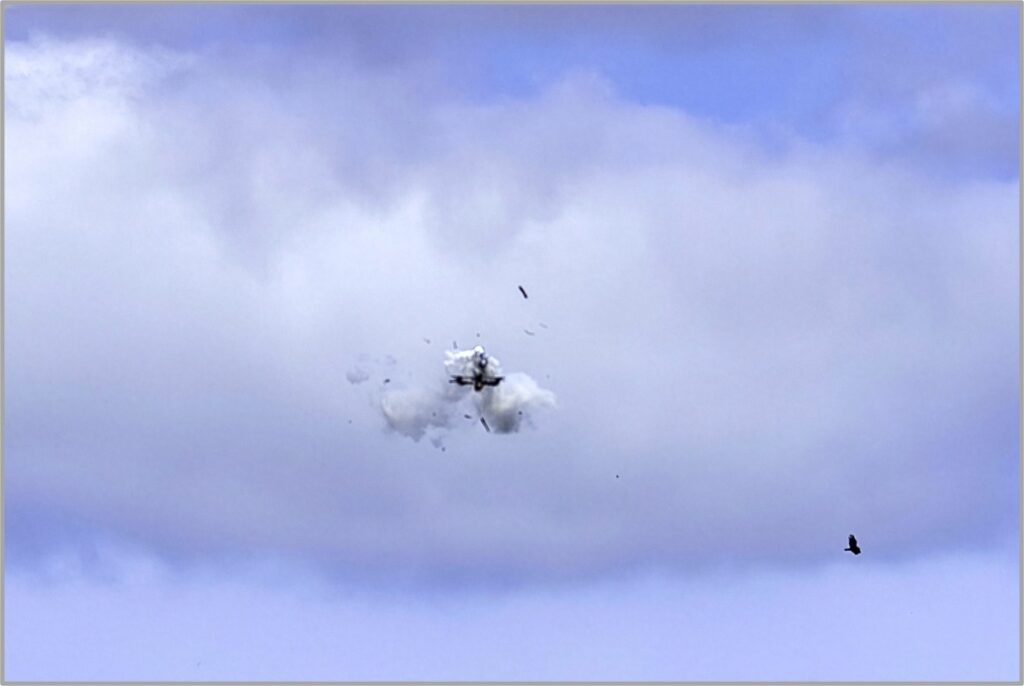
Fixed-wing and quadcopter drones were effectively neutralized using Parsons’ CUAS C2 platform, DroneArmor™, Allen Control Systems’ Bullfrog M240 kinetic weapons systems, HurleyIR EO/IR sensors, DroneShield’s RF sensor and effectors, and Echodyne’s EchoShield radars.
Effector Effectiveness Depends On The System
Effector effectiveness, whether kinetic or non-kinetic, is only as effective as the system that supports them. In critical infrastructure environments, timelines are compressed. When a drone is on a trajectory toward an asset, the system must detect, classify, decide, and act quickly enough to prevent impact. That response depends on high‑quality sensor data, reliable classification, and command and control that can coordinate and sequence engagements, particularly when more than one threat is present.
Kinetic effectors play an important role in scenarios where physical interdiction is required. However, their effectiveness is shaped by engagement sequencing, targeting accuracy, and system-level coordination. Without an integrated system, even highly capable effectors can be limited by delayed decision-making or incomplete threat awareness.
Non-kinetic effectors, including electronic warfare, directed energy, and cyber-based techniques, provide additional flexibility, particularly in environments where minimizing collateral damage is critical. These capabilities often rely even more heavily on system integration, requiring precise detection, identification of control links, and coordinated response to disrupt or neutralize threats without physical impact.
At the same time, operational priorities are shifting. Engagement volume, reload timelines, magazine depth, and cost-per-engagement now carry weight equal to performance, as operators increasingly face multiple drones in rapid succession. A layered, integrated approach helps operators select the right effector, kinetic or non-kinetic, based on mission needs, rules of engagement, and environmental constraints. Paired with multi-sensor detection and exportable command and control, it supports controlled engagements aligned to both the mission and the operating environment.
In these settings, success is not just defeating a drone. It’s preventing impact while minimizing risk of collateral damage and maintaining operations. This requires systems like DroneArmor that integrate into broader C5ISR environments and scales from single‑site protection to a distributed defense network.
Integration Requires Strong Partnerships
The threat environment is evolving faster than traditional development cycles. Systems that can’t adapt will quickly become obsolete.
That is why open, modular architectures matter. Integration depends on bringing together the right technologies and ensuring they operate as a coordinated system.
This approach allows DroneArmor to continuously expand its operational toolkit, from passive radars and advanced electronic warfare to low-collateral effectors such as high-energy lasers, high-power microwave systems, and low-cost guided rockets. By integrating these capabilities into a unified system, operators gain more response options and the flexibility to adapt to evolving threats while maintaining mission continuity and minimizing risk.
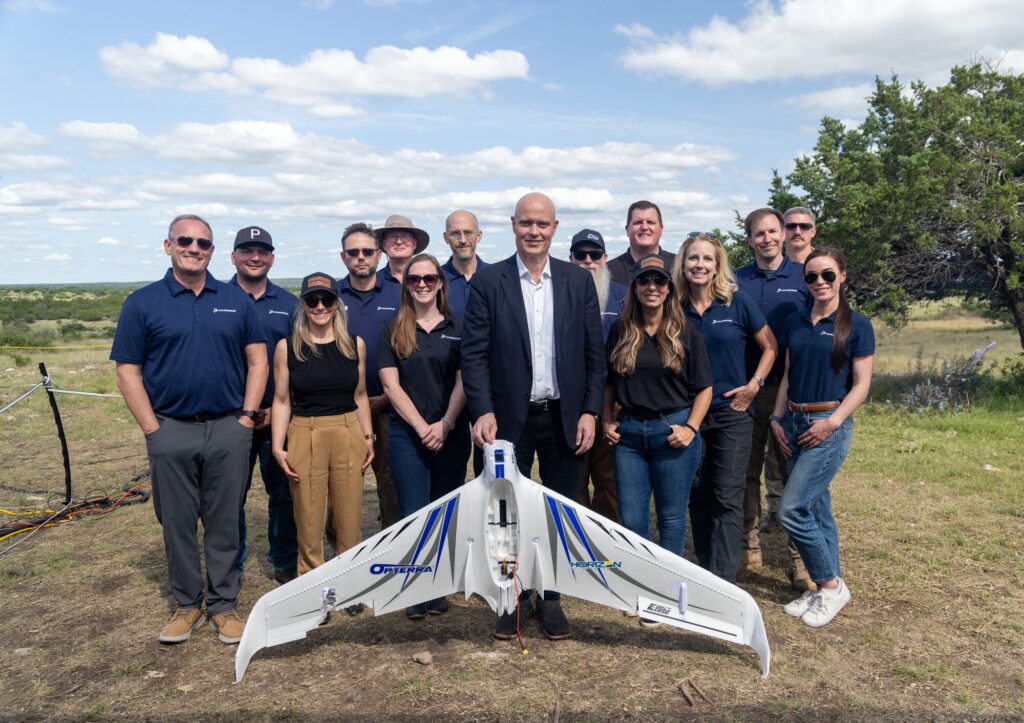
We applied these principles in a recent CUAS demonstration in Texas, where we showcased an integrated, end‑to‑end system combining multi‑sensor detection, command and control, and kinetic response in a realistic environment. At the center of that integration was DroneArmor, which unified inputs from across the system to deliver a coherent operational picture and enable coordinated decision‑making.
That integration included multiple mission‑relevant capabilities:
- Echodyne: cost-effective 360-degree radar sensing of small targets
- HurleyIR: EO/IR sensing for tracking and visual confirmation
- DroneShield: radio frequency detection and tracking of UAS control links and electronic warfare-based disruption of those links
- Allen Control System (ACS): the Bullfrog M240 kinetic weapons system
- Parsons: AI/MLextensible object detection (XOD) enabling automated target classification and sensor control, reducing operator cognitive load
Each component served a distinct role, but the value came from how DroneArmor integrated those capabilities, fusing data, enabling automated real‑time coordination, and sequencing responses across the system.
More importantly, the demonstration reflected operational conditions rather than controlled scenarios. It showed how an integrated system performs under real-world challenges such as engagement sequencing, response coordination, and sustained operations.
Leveraging AI/ML For Decision Advantage
AI and machine learning also play a role in sustaining performance. These capabilities help accelerate detection, improve classification accuracy, and reduce operator cognitive burden. In high‑tempo environments, this enables more consistent decision‑making and faster response timelines.
Within DroneArmor, this capability is enabled by Parsons’ proprietary AI/ML layer, XOD, which enhances how the system detects, interprets, and tracks aerial threats. Integrated with camera systems, XOD continuously monitors the environment, distinguishing drones from non-threats while maintaining accurate tracking as objects move. This automated approach improves identification accuracy with minimal operator input and supports dynamic sensor management across the system.
These capabilities support a broader shift toward speed-to-capability, where systems are designed to be deployed, adapted, and scaled quickly rather than developed over long cycles, ensuring that CUAS solutions remain effective as threats evolve.
Integrated Systems Deliver Mission Success
Effectors are an important capability, but they are only one part of the solution. The challenge we face is system‑level, and it requires a system‑level response that integrates sensing, decision‑making, and action in a way that is reliable, repeatable, and adaptable, supporting operators under pressure.
Modularity and open architectures grounded in sound software engineering principles enable CUAS systems to evolve as new sensors and effectors emerge. The DroneArmor framework accelerates integration and validation of new capabilities in weeks rather than months. This speed is enabled by our Summit Point, WV, CUAS Center of Excellence (COE), which provides a flexible laboratory and test environment for early rapid prototyping, integration, and operational validation, in collaboration with our partners, to deliver advanced solutions faster and at lower cost.
This is what defines effective CUAS in the current environment. It is not about isolated technologies. It is about how those technologies are integrated to deliver outcomes that protect critical infrastructure and maintain mission continuity.
About The Author
Counter-UAS Center Of Excellence Enhances Integrated Security Solutions
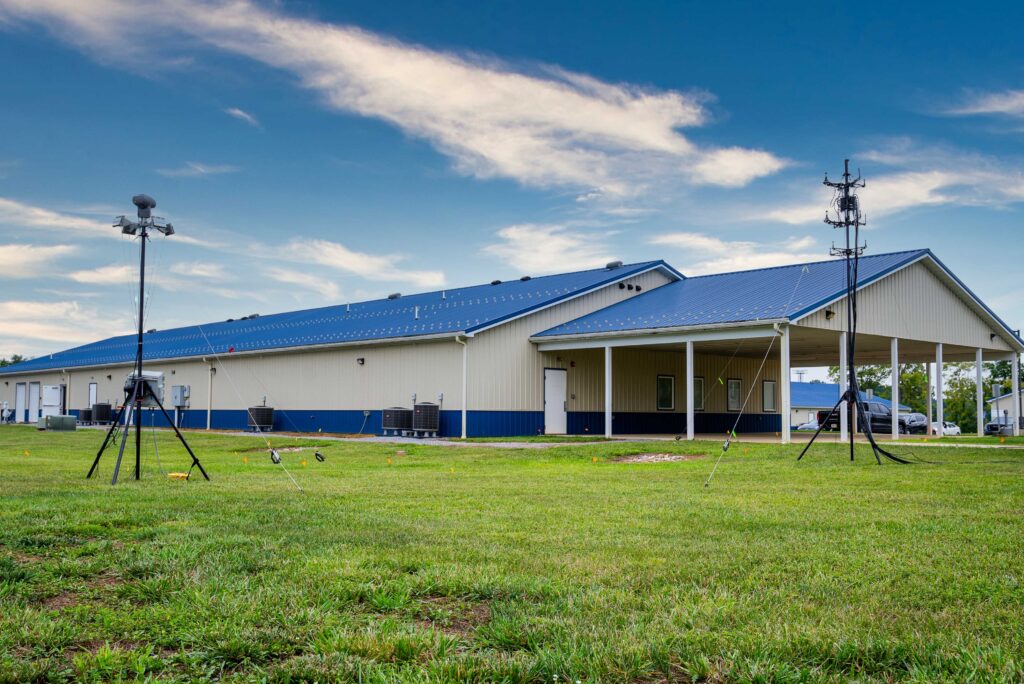
There is no “one size fits all” solution to the C-UAS challenges faced by our customers. Read more about our Counter-UAS Center Of Excellence, conveniently located in Summit Point, West Virginia.