US 101 Fish Barrier Removal – Jefferson and Clallam Counties, WA
Client

- Washington State Department of Transportation
Project Value 
$76 Million
Market

Bridge, Transportation
Services

Engineering
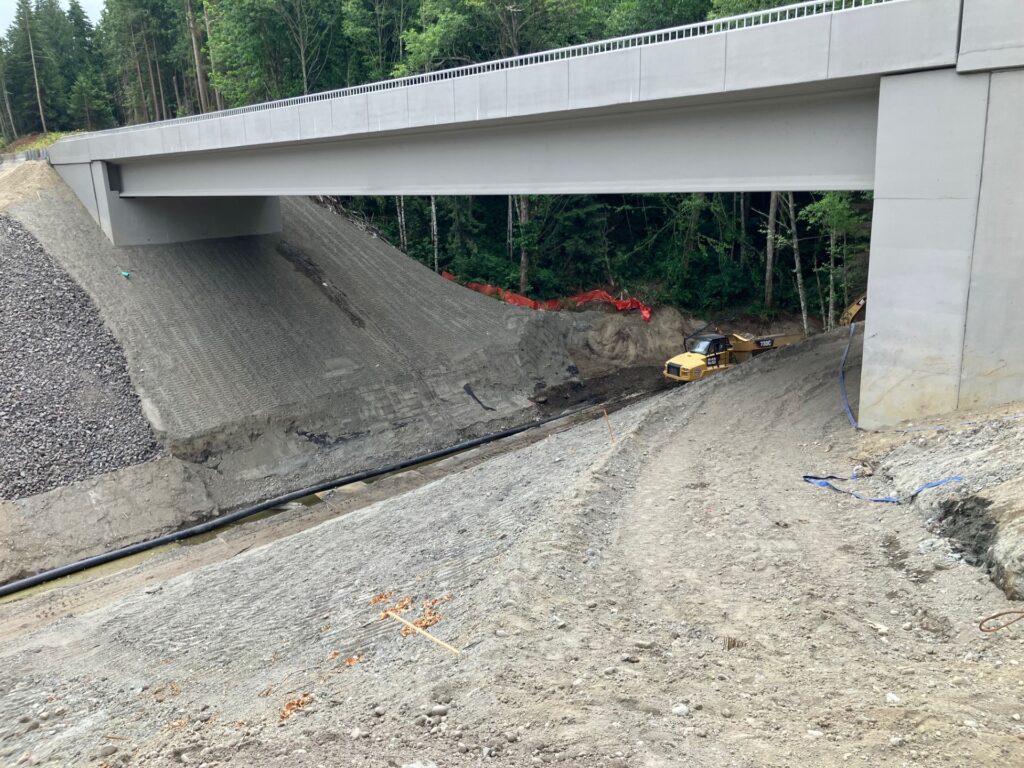
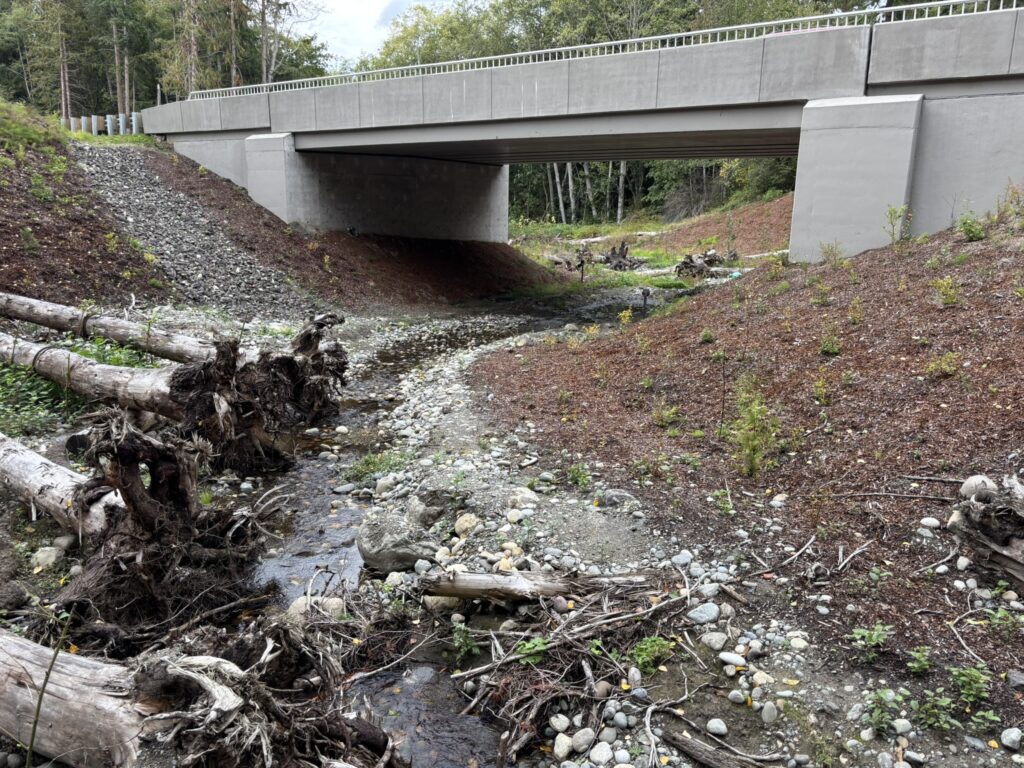
We are the lead designer for a $75 million design-build project that will remove six barriers to fish migration at stream crossings along US 101 between Sequim and Discovery Bay in Washington’s Jefferson and Clallam Counties. The project supports Washington State’s efforts to protect and restore fish runs affected by culverts beneath state highways by opening several miles of upstream habitat for salmon, bull trout, steelhead, and other aquatic species.
The project includes replacing six existing culverts that currently impede fish passage through Johnson Creek, Chicken Coop Creek, Eagle Creek, Contractors Creek, and unnamed Tributary 2 to Sequim Bay. Stream channels will be reconstructed and graded to simulate natural streambeds, creating long-lasting, high-quality aquatic habitat that supports all life stages of endemic fish and other aquatic life. Parsons led the stream design team in creating an addendum to the contact requirements, which corrected inaccurate conceptual templates to field-verify pool-riffle, step-pool, and boulder-cascade designs. Also, it explicitly added that engineered large wood volumes were increased by 83% for key pieces
Accelerating Delivery, Minimizing Community Impacts
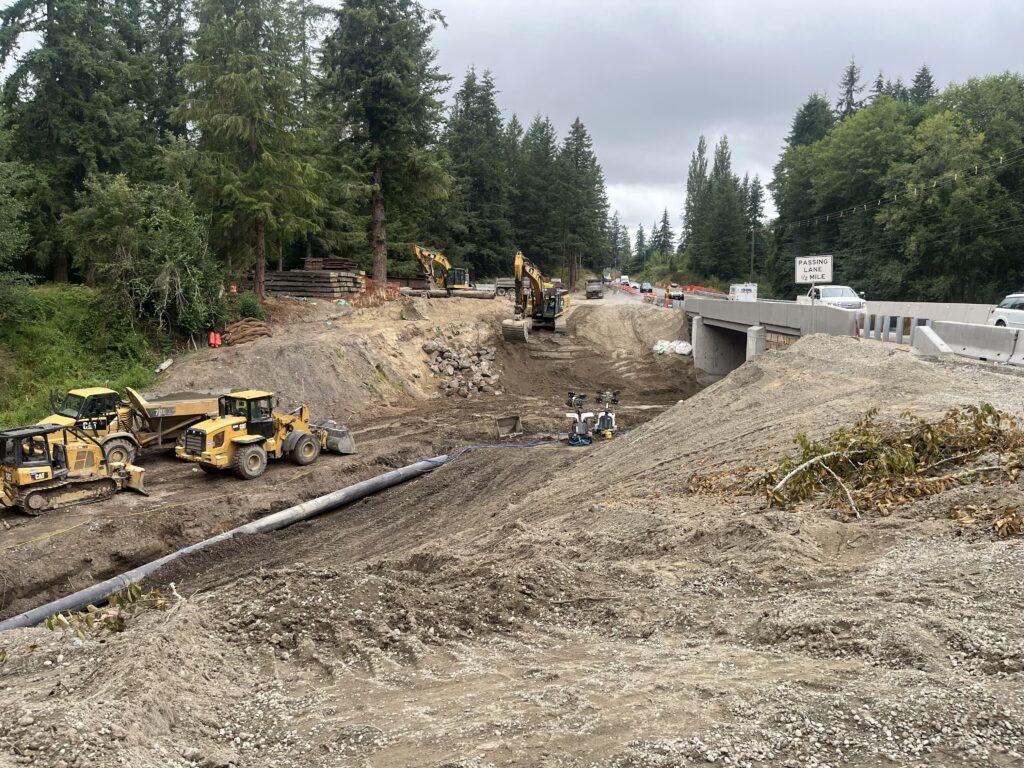
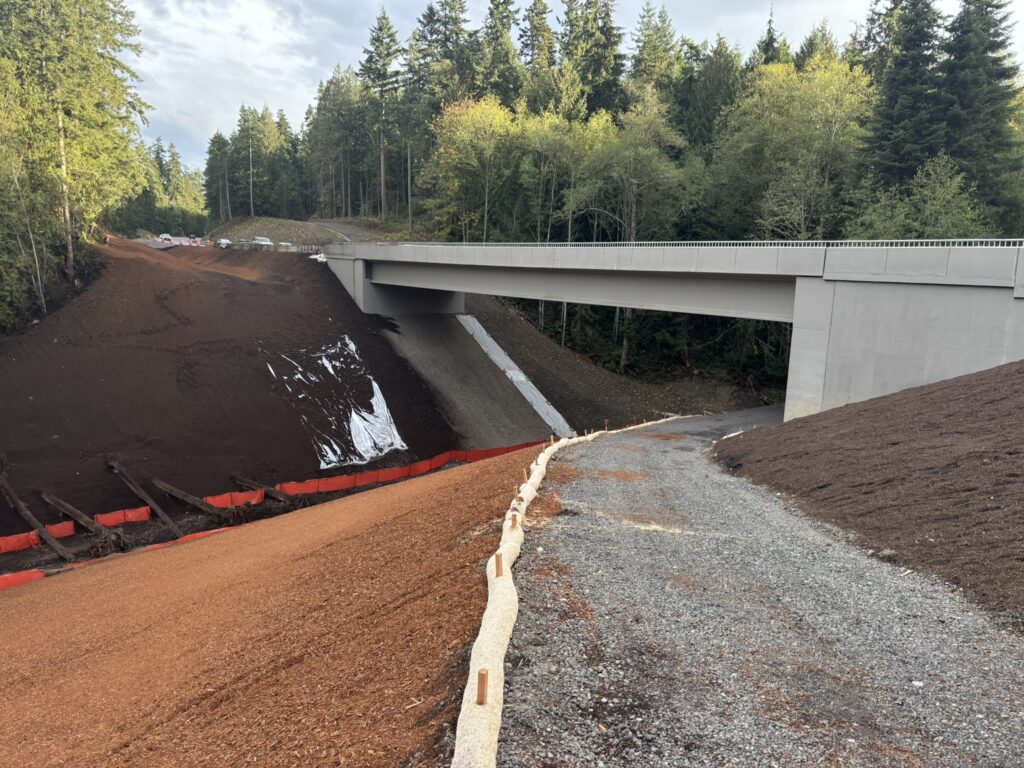
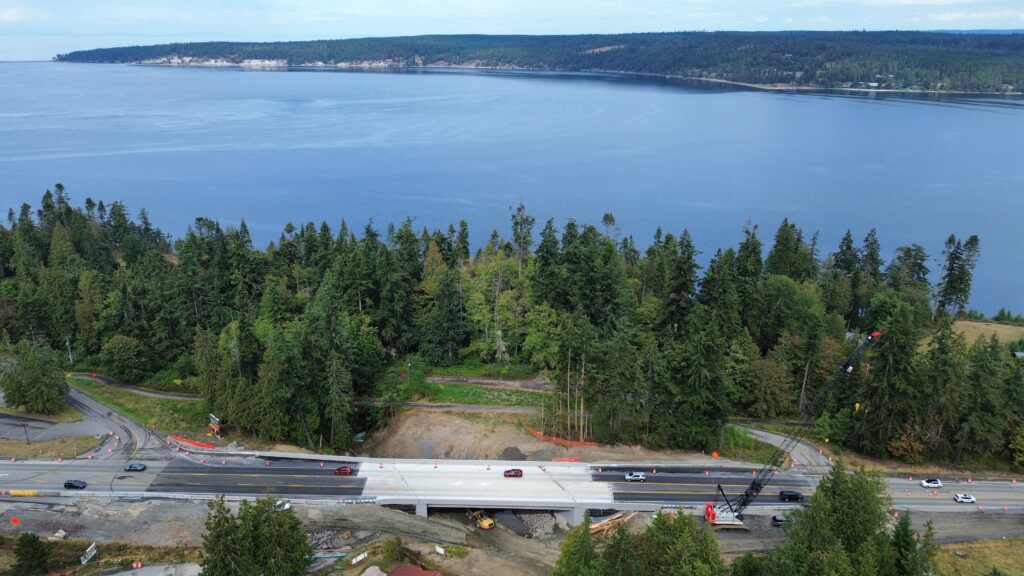
We are implementing three alternative technical concepts that will significantly reduce construction duration and associated impacts. Through single-stage bridge construction at two bridge sites and a modified bridge type using a precast arch culvert at a third site, the team will reduce construction schedules by a combined seven months. The two-lane shoofly bypasses and single-stage construction eliminated 129 days of traffic disruption along US 101. Additionally, the final configurations opened to the public 150 days ahead of schedule. These schedule savings result in fewer disruptions to the traveling public, reduced impediments to fish migration, and lower potential environmental risks during construction.
Protecting Sensitive Environmental Resources
The design prioritizes environmental stewardship by minimizing impacts to wetlands, streams, riparian corridors, and other sensitive ecological resources. Our top-down construction sequencing maximizes work outside available in-water work windows, helping reduce impacts to aquatic environments while improving construction efficiency.
These systems eliminated the need for diesel pumps, which directly reduced turbidity, noise, carbon emissions, and job-site spill risks. The team also evaluated conditions beyond the immediate project area to identify factors affecting stream aggregation and degradation, supporting collaborative discussions with stakeholders and agencies to meet project performance criteria.
Delivering Collaborative, Cost-Saving Solutions
Our designers worked closely with construction partners through practical design workshops that generated multiple cost-saving opportunities and design enhancements. The team continues to refine the design to reduce schedule and budget impacts while advancing the project’s environmental and transportation objectives. Key stakeholders include the Washington State Department of Transportation (WSDOT), Jamestown S’Klallam Tribe, the Washington Department of Fish and Wildlife, and local jurisdictions. This was the first design-build fish passage project to implement WSDOT’s updated Scour Policy, using innovative rock revetments instead of secant piles to save costs and avoid NEPA reinitiating delays.
Enhancing Transportation Reliability
In addition to fish passage improvements, the project includes installation of precast arches and culverts, construction of four simple-span bridges, embankment construction, creek channel grading, paving and pavement marking, signing, temporary illumination, erosion control, and planting. Together, these improvements will restore ecological connectivity at six locations while enhancing the reliability and resiliency of a vital transportation corridor along US 101. These integrated geomorphic and hydraulic corridor improvements do more than help fish, they directly reduce long-term flood and scour risks for WSDOT, lowering future maintenance exposure for the highway
