UV PFAS Destruction
Per- and polyfluoroalkyl substances are persistent and challenging to treat. Their strong carbon-fluorine bonds resist conventional water and waste processes, which is why many utilities, industries, and public agencies are moving beyond capture-only approaches and prioritizing true PFAS destruction. We combine proven PFAS destruction technologies with integrated system design to destroy PFAS in water, wastewater, and complex waste streams, helping customers meet performance goals, control costs, and demonstrate compliance.
How To Destroy PFAS Using UV Technology
Where Is PFAS Found?
PFAS are found in AFFF, textiles, nonstick coatings, metal plating, semiconductors, and paper treatments, and they reach water through industrial discharges, training areas, landfills, and biosolids. Regulations are tightening, and customers are asking a simple question: how to permanently destroy PFAS and verify its destruction. Our answer starts with ultraviolet reactions that target the toughest bonds.
How UV-Based Chemistry Destroys PFAS
Our UV technology uses high-energy photons to activate photocatalytic reagents and cleave C-F bonds. Based on the site conditions and PFAS profile, specialized blends of photocatalysts are prepared to generate reactive radical species capable of achieving complete (>99%) destruction of PFAS, with complete fluoride mass balance.
Our UV technology is capable of:
- Generating oxidizing radicals (hydroxyl, sulfate) that transform precursors and support defluorination for select compounds.
- Initiating and driving photoreductive pathways which produce hydrated electrons, allowing for the direct cleavage of C-F bonds regardless of PFAS class
- Maintaining complete PFAS destruction in complex matrix conditions, and from low (ng/L) to high (g/L) PFAS concentrations
In real systems, PFAS treatment technology is most efficient when UV is applied to concentrated streams produced by ion exchange, foam fractionation, reverse osmosis, or membrane distillation. Concentrate first, then destroy PFAS in brines, regenerants, and other side streams to minimize energy use per mass destroyed and simplify verification.
Our UV-Activated Photochemical Process
How Our Process Destroys Over 99% PFAS
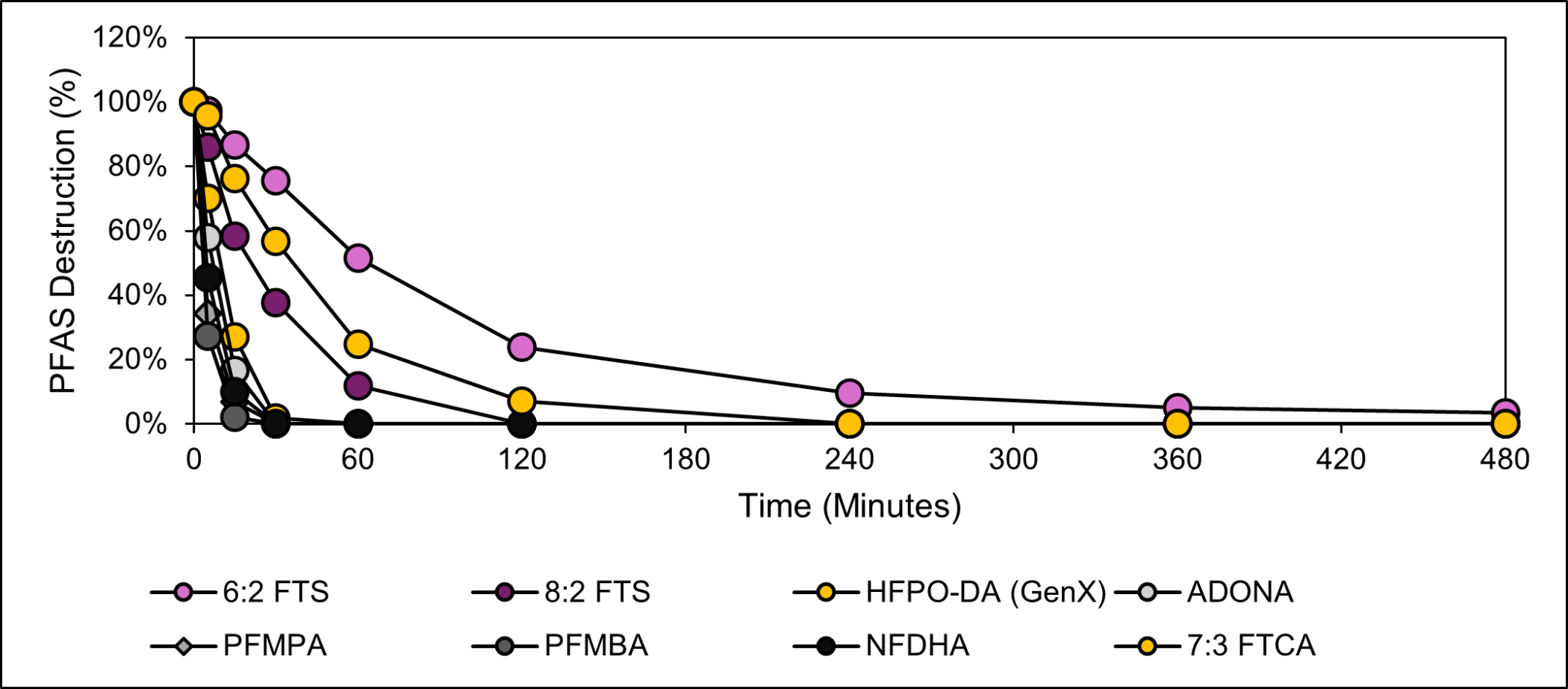
Through our Internal Research and Development program, we developed a UV-activated photochemical process to destroy PFAS across various liquid matrices. Bench and pilot testing show greater than 99.99% PFAS reduction in groundwater, landfill leachate, wastewater, and sorbent regenerants. In the Innovative Solutions Canada Phase 1 program, the process achieved greater than 99% PFAS destruction with 98–106% recovery of inorganic fluoride, demonstrating closure of the fluorine mass balance and full conversion to fluoride.
Application To AFFF Rinsates
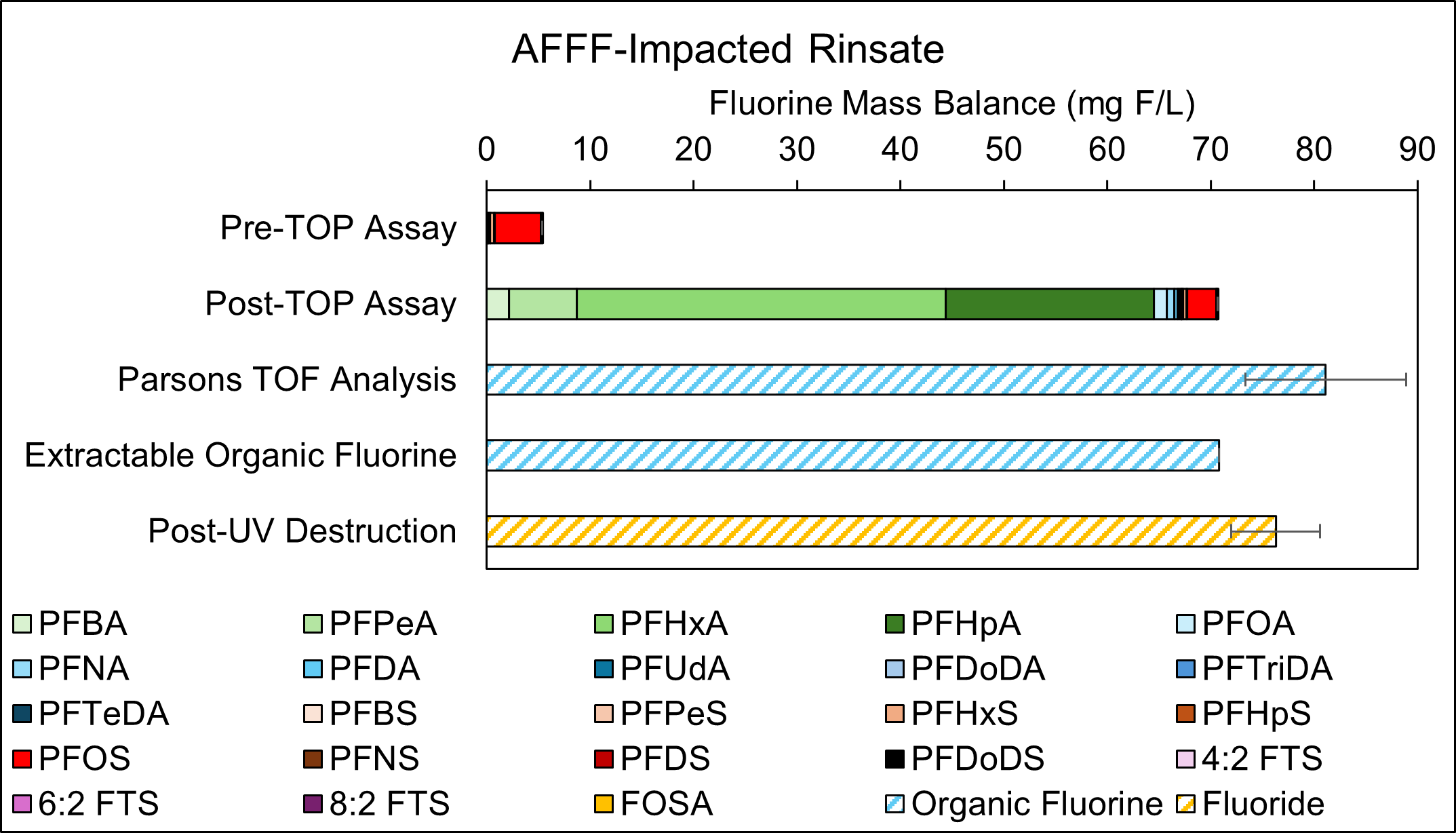
We’ve also applied the process to AFFF-impacted rinsates with high organic fluorine levels (73 ± 3 mg/L). Third-party testing, supported by our in-house analyses, confirmed a reduction of organic fluorine to less than 0.025 mg/L within hours, greater than 99.9996% destruction, with fluoride mass balance closure of approximately 100% ± 5%. For organizations asking how to get rid of PFAS in challenging rinsates, these results offer a clear path forward.
From Prototype To Field Deployment
Flow-Through UV Reactors
We engineered compact, flow-through reactors to make destroying PFAS with UV practical in the field:
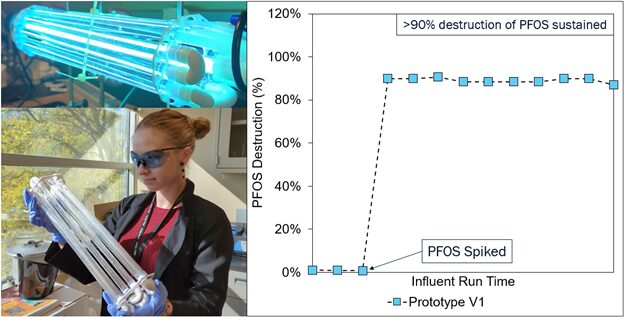
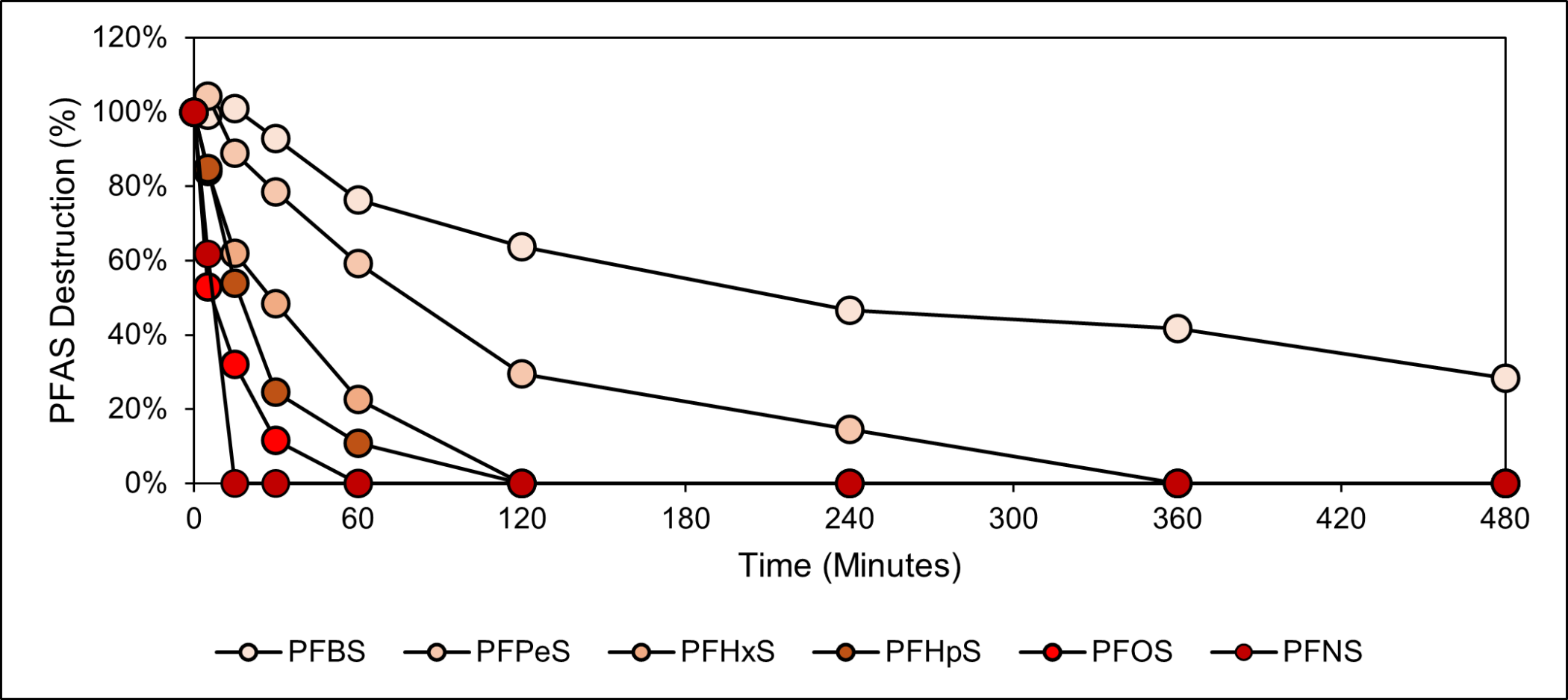
- Prototype (2024): A lightweight, compact reactor for integration into existing wastewater systems. Using LC-MS/MS and total fluorine analysis, this prototype achieved sustained, continuous-flow destruction, with over 90% of PFOS converted to inorganic fluoride.
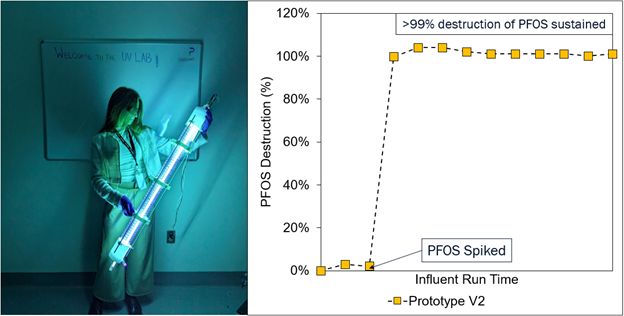
- Prototype (2025): A next-generation design optimized for deployment. It operates as a stand-alone unit or within a treatment train, with modular reactors that scale capacity and allow tunable chemistry. Using the same analytics, we’ve demonstrated greater than 99% PFAS destruction with complete fluoride mass balance closure and no accumulation of partial transformation products.
Our team is integrating this PFAS treatment technology with established capture systems to drive throughput and lower lifecycle costs. Scaled systems are planned for client sites beginning in late 2026.
Performance Across Matrices And Co-Contaminants
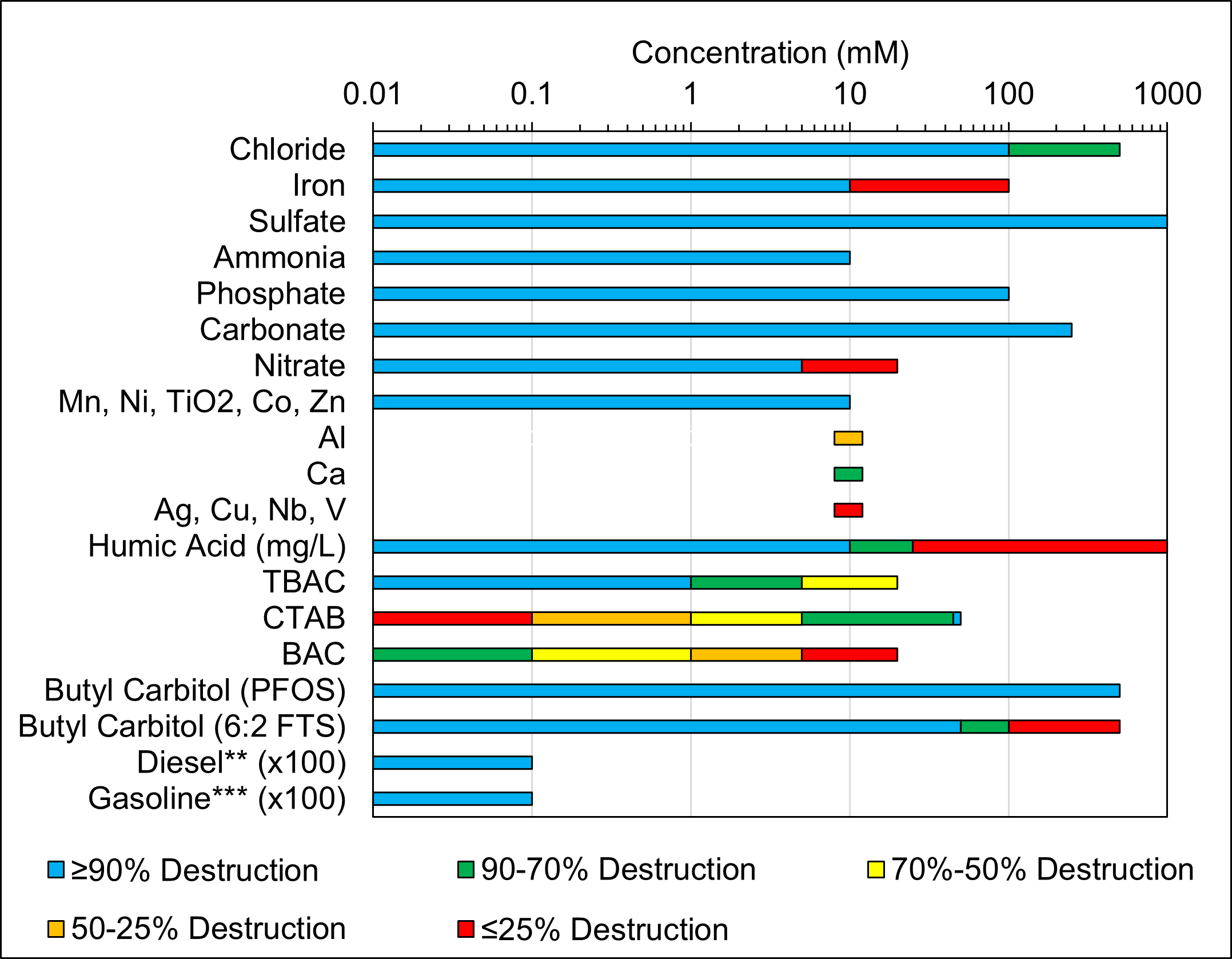
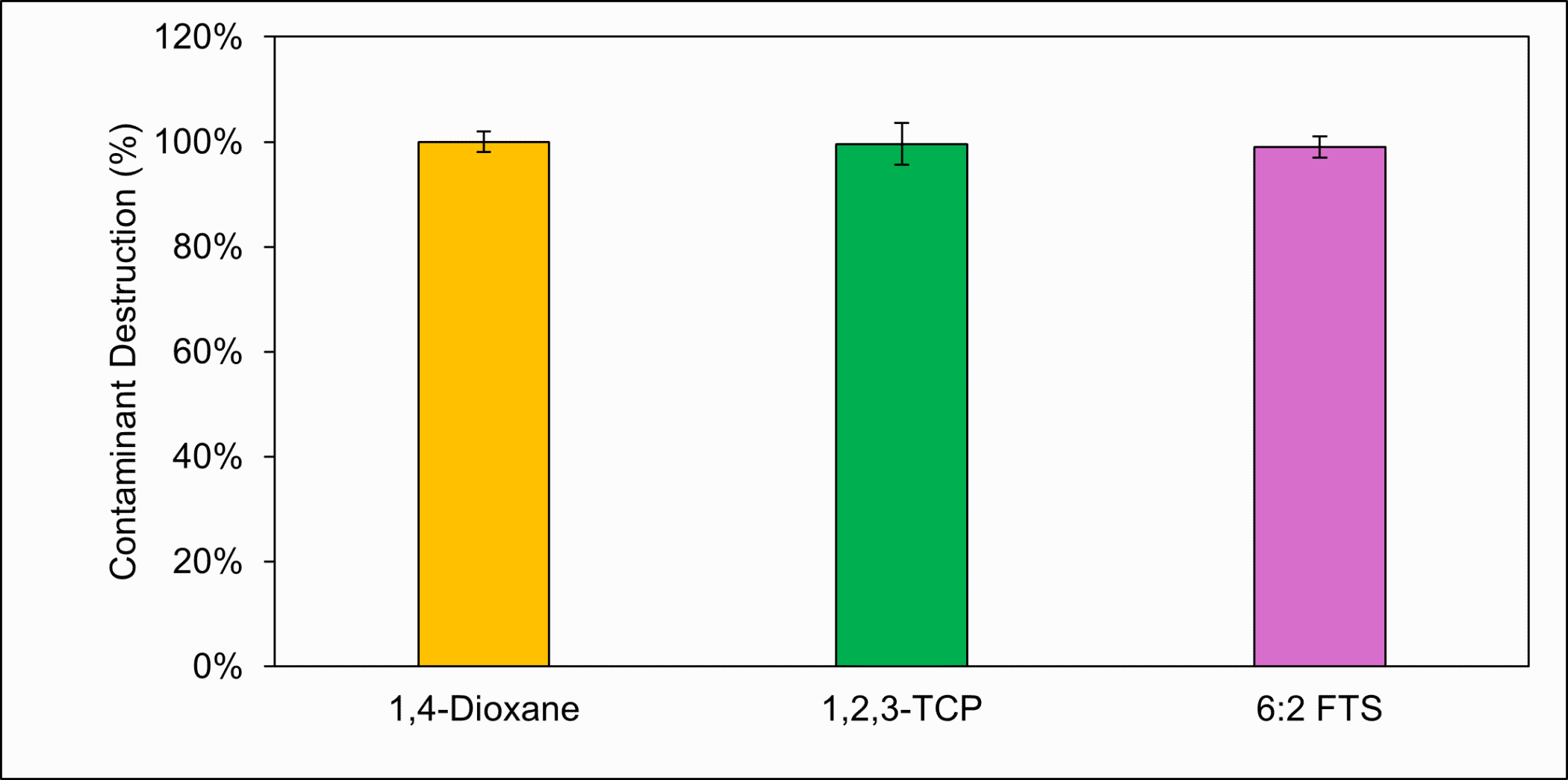
The process is designed for real-world conditions. High PFAS destruction rates are maintained in the presence of common inorganics, including chloride (~24 g/L NaCl), sulfate (96 g/L Na2SO4), phosphate (16 g/L Na3PO4), and carbonate (~27 g/L Na2CO3). While baseline operation is sensitive to humic substances (50 mg/L), nitrates (850 mg/L as NaNO3), and certain dissolved metals (e.g., 1.3 g/L Cu2+), we’ve developed strategies to mitigate these effects. The system remains robust with PFAS-adjacent organics such as butyl carbitol and fuels following fire suppression; PFOS destruction exceeded 99% even at 80 g/L butyl carbitol and saturated gasoline/diesel concentrations.
Destruction follows first-order decay kinetics, supporting predictable design across a wide concentration range. While best suited for concentrated wastes, the technology can also reduce low concentrations (below 1 µg/L) to under 5 ng/L.
Integrated Systems, Compliance, And Verification
Effective PFAS remediation technologies account for variable chemistry, short- and long-chain species, and matrix effects such as alkalinity, natural organic matter, and halides. We design integrated solutions that pair capture with PFAS destruction technologies to balance performance and cost:
- Concentrate first, using ion exchange, foam fractionation, reverse osmosis, or membrane distillation, then destroy PFAS in brines, concentrates, or regenerants via UV, electrochemical, or thermal steps as appropriate.
- Apply real-time controls to tune UV fluence and reagent dosing using online monitoring, ensuring high mineralisation while minimising chemical use.
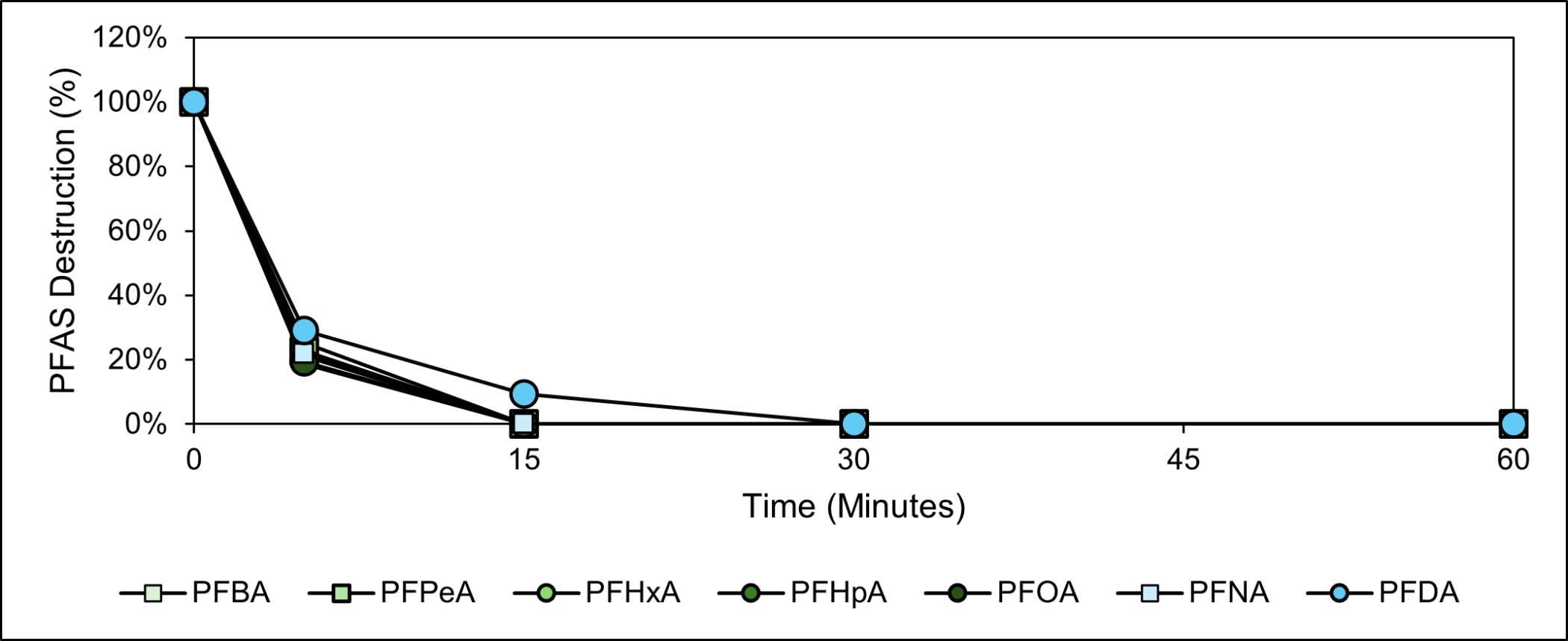
- This UV technology achieves complete destruction of PFAS in the liquid phase, avoiding the generation of fluorinated intermediates and allowing for complete fluoride mass balance.
We emphasize transparent mass balance. That means measuring influent PFAS, tracking captured streams, verifying defluorination through inorganic fluoride, and confirming that regulated by-products remain below discharge and air permit limits. Our teams support permitting, residuals management, and reporting aligned with Department of Defense, EPA, and state guidance for on-site destruction. Bench and pilot programs provide verifiable metrics such as destruction rates, energy per gram of PFAS, and fluoride yield, so customers can evaluate options confidently.
Dive Deeper: Reductive Defluorination Of PFAS Using A UV Photochemical Reactor
Breaking the "Forever" Cycle with Catalyzed UV
How do we solve the problem of "forever chemicals" without simply moving the waste from one place to another? In this presentation, we dive into our approach to PFAS destruction using Catalyzed UV technology.
What You’ll Learn:
- The Problem with "Removal": Why secondary waste streams are a major hurdle in PFAS remediation.
- The Catalyzed UV Approach: How a synergistic combination of UV light, iodide, and sulfite under alkaline conditions creates a powerful reducing environment.
- The Science of Destruction: How reducing radicals, specifically the aqueous electron, facilitates the breakdown of PFAS into harmless components.
- Proven Results: Evidence of complete PFAS destruction through inorganic fluoride recovery, even in complex water matrices containing salts, metals, and organic co-contaminants.
Frequently Asked Questions (FAQ's)
Featured Articles

PFAS Treatment: Real-World Experience With Ex-Situ Treatment And In-Situ Research And Development
Technical Webinar Series Background/Objectives This is the third presentation of a three-part series to discuss per- and polyfluoroalkyl substances (PFAS). The first two parts presented the industries’ current understanding of […]

Breaking Down PFAS One Bond At A Time
Per- and Polyfluoroalkyl Substances (PFAS) possess both water and oil repelling properties making them commercially useful for a variety of industries. It is specifically due to these properties that they […]
Mitigating PFAS: Changing The Paradigm
Our environmental experts are working hard to find new ways to help our clients mitigate per- and polyfluoroalkyl substances (PFAS) contamination, including researching new methods to destroy these non-degrading contaminants. […]

Parsons And Battelle Deliver Industry-Leading PFAS Investigation Capabilities
CENTREVILLE, Va. (February 17, 2021) – Parsons Corporation (NYSE: PSN) announced today that the company has entered into a collaborative agreement with Battelle Memorial Institute (Battelle) to combine Parsons’ unique […]

Destruction Of PFAS Under Ambient Conditions
A Technical Webinar Series Background/Objectives Per- and polyfluoroalkyl substances (PFAS) have gained significant attention in recent years due to their wide-spread presence in the environment. Current treatment techniques involve removal […]
Parsons To Support Clients In Addressing PFAS And Achieving EPA’s National PFAS Drinking Water Regulations
CHANTILLY, Va. (April 10, 2024) – Parsons Corporation (NYSE: PSN), an industry leading Per and Polyfluoroalkyl Substances (PFAS) investigation and remediation company, is ready to support our current and future […]