NEOMMA, The New Marseille Metro — Marseille, France
Client

- Aix Marseille Provence Métropole
Project Value 
$585 Million
Market

Rail, Transportation
Services

Program/Construction Management (PM/CM), Sustainability
Marseille Metro has been a vital transportation system in Marseille, France since 1977, operating on two lines over 22km (13.7mi), and 29 stations. To address projected population growth in Marseille, France’s second-largest city and home to its largest port, and to extend its 40-year-old metro lines, Aix-Marseille-Provence-Metropole aims to upgrade Marseille Metro lines 1 and 2. The project involves transitioning from Grade of Automation 2 (GoA2) to fully driverless Grade of Automation 4 (GoA4) and replacing the aging rolling stock with a new fleet—all while maintaining uninterrupted passenger service.
The newly modernized, fully automated system will be reopened as NEOMMA which is an acronym for ‘New (neo) Metro of Marseille’.
Our Role
In 2016, we were awarded program management and construction management services to implement a new rolling stock, a computer-based train control (CBTC) system, and communications upgrades for unmanned train operation. As the sole lead consultant, we oversee the entire metro network upgrade and automation, providing comprehensive program and construction management (PMCM) services. Our responsibilities include managing engineering and program tasks such as project management, procurement, stakeholder engagement, design, testing, and commissioning.
Providing Technical Expertise
During the preliminary phases, we conducted diagnostic studies to assess the capacity of the existing metro system and performed obsolescence analyses. The team developed a series of feasibility studies that accounted for technical, environmental, financial and scalability related factors. These efforts culminated in comprehensive business cases that supported informed decision-making for the project’s direction. For example, one of the key decisions that resulted from this analysis was to award both the CBTC signaling contract and the rolling stock contract to the same supplier. This strategy was adopted to mitigate risks associated with interface issues.
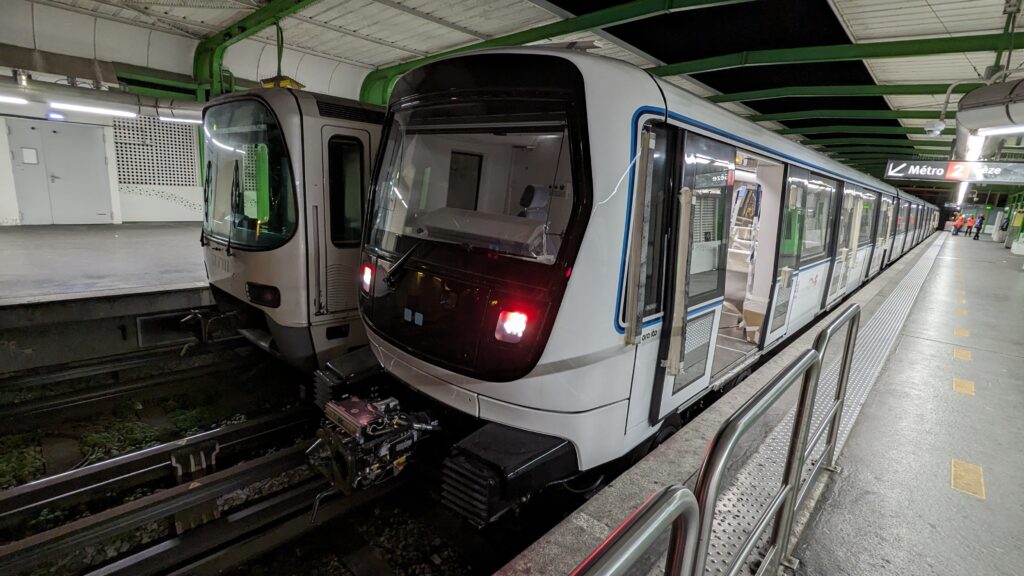
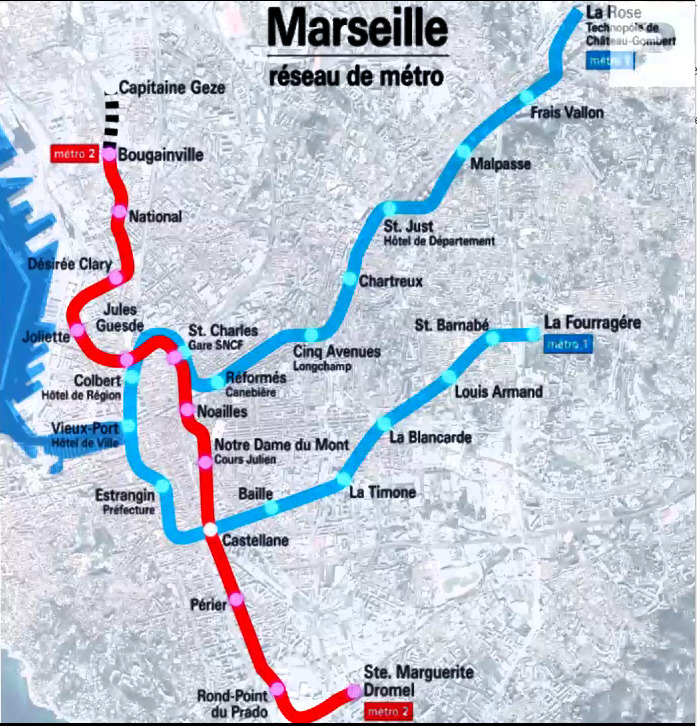
Approximately 400,000 passengers use the metro daily, and this is expected to increase significantly. To accommodate this rise in passenger numbers, the upgraded system consists of 65m-cars operating on two lines encompassing 21.5km of track. Between Line 1 and Line 2 there are a total of 29 stations (with two interchanges) and the maximum train speed is 80 km/h..
Project Scope
Under the contract, we offered technical proficiency to the client, covering key areas such as:
- System Design
- CBTC GoA4
- Rolling Stock
- Control Center upgrades
- SCADA
- PlatformScreen Doors
- Brownfield Migration
- Brownfield Migration
- Test and commissioning
- Safety management
- RAM
- Cybersecurity
- Depot design modification for full automation
Improving Passenger Experience & Journey Times
Working in close partnership with the client and subcontractors, our team delivered an efficient integration and renovation without interruption to operations. As a result, NEOMMA includes:
- Improvement in headway from 4 minutes to 2 minutes
- Wide Platform Screen Doors (PSDs) for fast and safe access in and out of the carriages
- Enhanced journey times, especially during peak hours and events like Velodrome competitions
- Improving accessibility to platforms and stations with new branding and wayfinding
- Fully air-conditioned and Wi-Fi-enabled rolling stock
- Passenger information systems on board and on platforms
Implementing Advanced Communications-Based Train Control (CBTC)
The NEOMMA project introduced advanced CBTC GoA4 technology to the Marseille Metro, requiring comprehensive personnel training for all operational modes. Parsons developed a training program with a dedicated center featuring real systems and a simulator. Parsons defined simulator specifications, reviewed its design, and conducted Factory Acceptance Testing (FAT). The simulator enables scenario-based training for events like equipment failures or passenger calls, ensuring operators are prepared for routine and exceptional situations. This integrated approach equips the workforce to handle daily operational challenges effectively.
Project Challenges: CBTC Migration Strategy
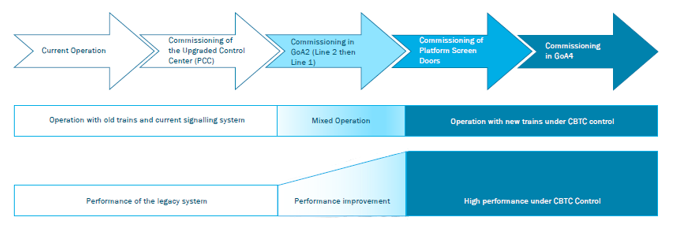
One of the most significant challenges on the Marseille project was to define a migration strategy with minimal disruption to existing services while transitioning to the new CBTC GoA4 system and introducing the new rolling stock on the network.
We mitigated delays and maintained the highest safety and quality standards by:
- Phased signaling migration: Starting with the commissioning of the upgraded Control Center (PCC) followed by CBTC deployment.
- Installation of Platform Screen Doors (PSD): Installation after the new trains arrive, as the new train gauge differs from the existing one ensuring efficient integration of the PSD system with the new rolling stock, minimizing retrofitting, while preventing service disruptions.
Installation And Tests Approach
In collaboration with the client, we also defined a thorough system test strategy to minimize service disruption and obtained all necessary authorizations. The test scope includes factory, commissioning, type, integration, endurance, non-regression, and maintenance tests.
Decommissioning Of The Rolling Stock
We oversaw the deconstruction of old trains, ensuring that a dedicated contractor responsibly removes asbestos, sorts materials, and recycles valuable components. The team also implemented strict environmental requirements during the project, including comprehensive waste management and water treatment protocols, to minimize the ecological footprint during both construction and operation phases.
Sustainability In Motion: Marseille Metro’s Energy-Efficient Upgrade
The newly designed, energy-efficient metros consume 25% less energy than the previous models. They also produce fewer emissions, and will be 96% recoverable at the end of their lifespan. Additionally, during the deconstruction of the old trains, the assigned contractor is in charge of removing asbestos and sorting various materials for recycling.
-
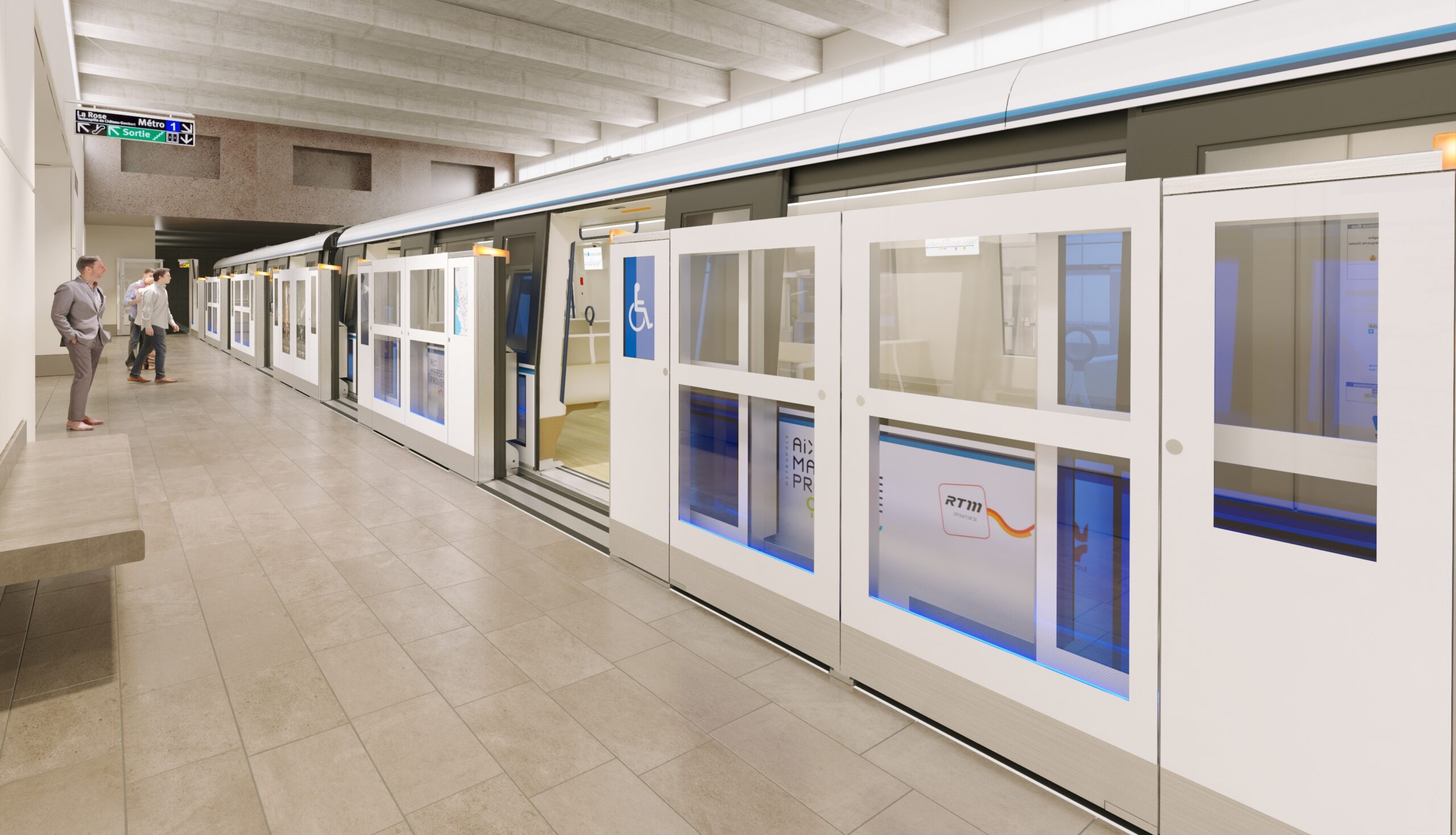
- The Marseille Metro features wide platform screen doors (PSDs) for fast access in and out of the carriages
-

- The Marseille Metro features wide platform screen doors (PSDs) for fast access in and out of the carriages
-
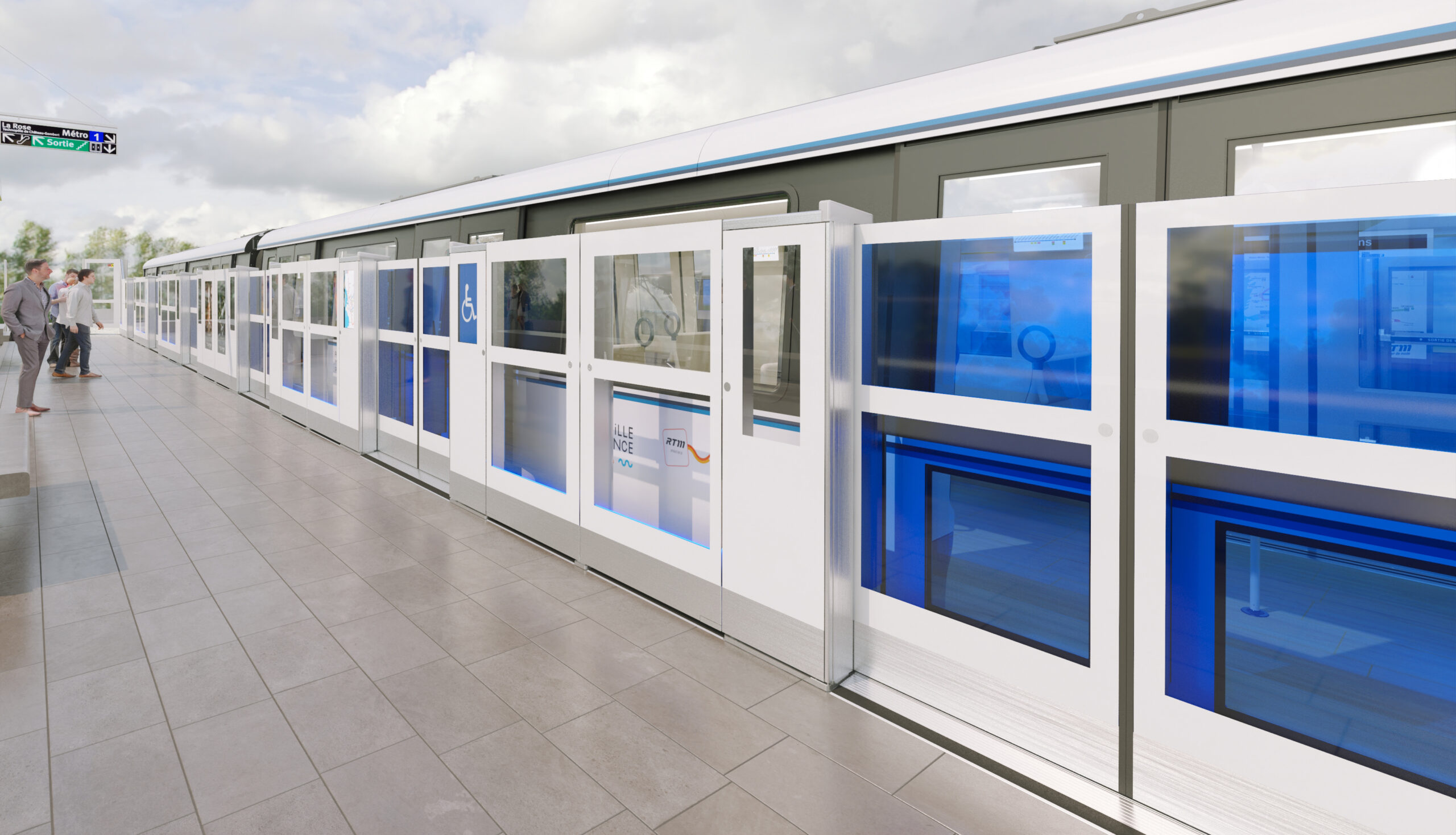
- The Marseille Metro features wide platform screen doors (PSDs) for fast access in and out of the carriages
-
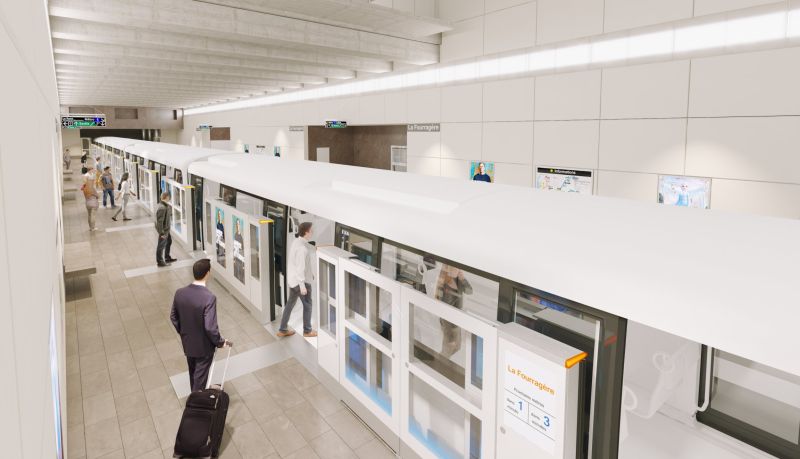
- The Marseille Metro features wide platform screen doors (PSDs) for fast access in and out of the carriages
-

- The Marseille Metro features wide platform screen doors (PSDs) for fast access in and out of the carriages
Transforming Rail And Transit
Join Our Team!
Check out our open opportunities in EMEA.

