Brooklyn Bridge Rehabilitation—Brooklyn, NY
Client

- New York City Department of Transportation
Project Value 
$275,000,000 (Total Constructed Value)
Market

Bridge
Services

Engineering
The Brooklyn Bridge, the first steel cable suspension bridge and a National Historic Landmark, remains one of New York City’s most iconic structures. Since the 1930s, we have played a central role in its preservation.
Overview Of Our Services
We have led major rehabilitation and seismic retrofit programs to ensure safety, resiliency, and continued service as a vital transportation link. Recent work includes strengthening the masonry arches and towers. Additionally, we have provided services to widen the pedestrian promenade and implemented state-of-the-art structural retrofits. These are designed to withstand a 2,500-year seismic event. These efforts safeguard the bridge’s historic character while meeting modern infrastructure demands and advancing preservation engineering.
The Iconic History Of The Brooklyn Bridge
The Brooklyn Bridge is a combined suspension/cable-stayed bridge spanning the East River. It connects the boroughs of Manhattan and Brooklyn and has a total length of approximately 6,000 feet.
The Brooklyn Bridge is the oldest East River bridge and was the world’s first steel cable suspension bridge when it opened to traffic in 1883 and its 1,600-foot-long main span was more than 40 percent longer than its closest rival.
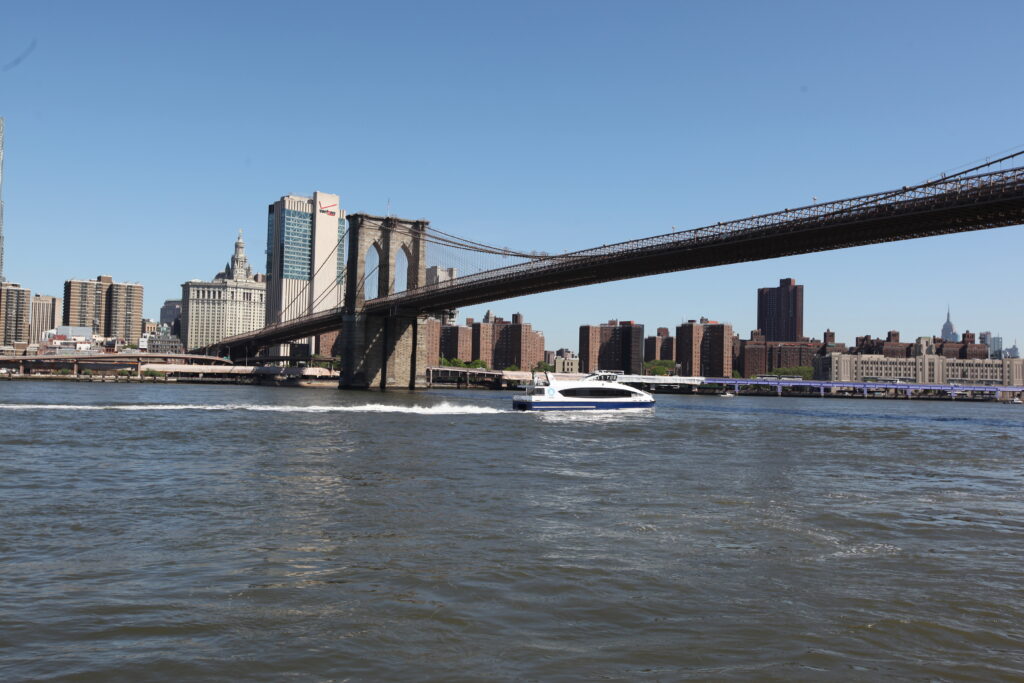
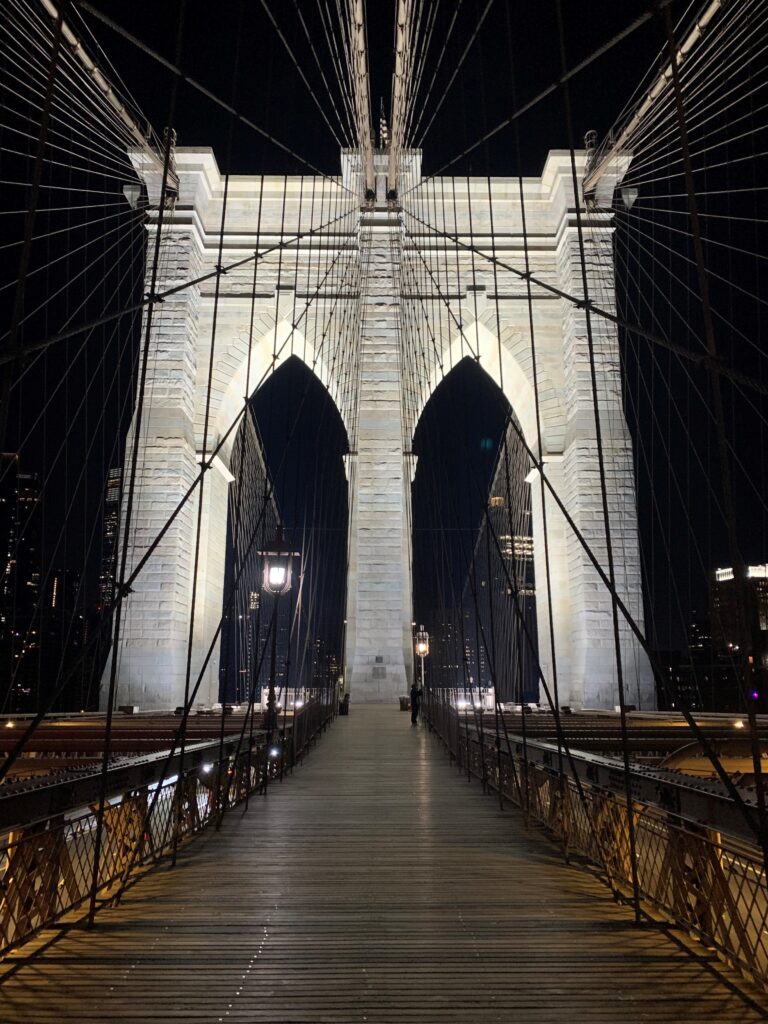
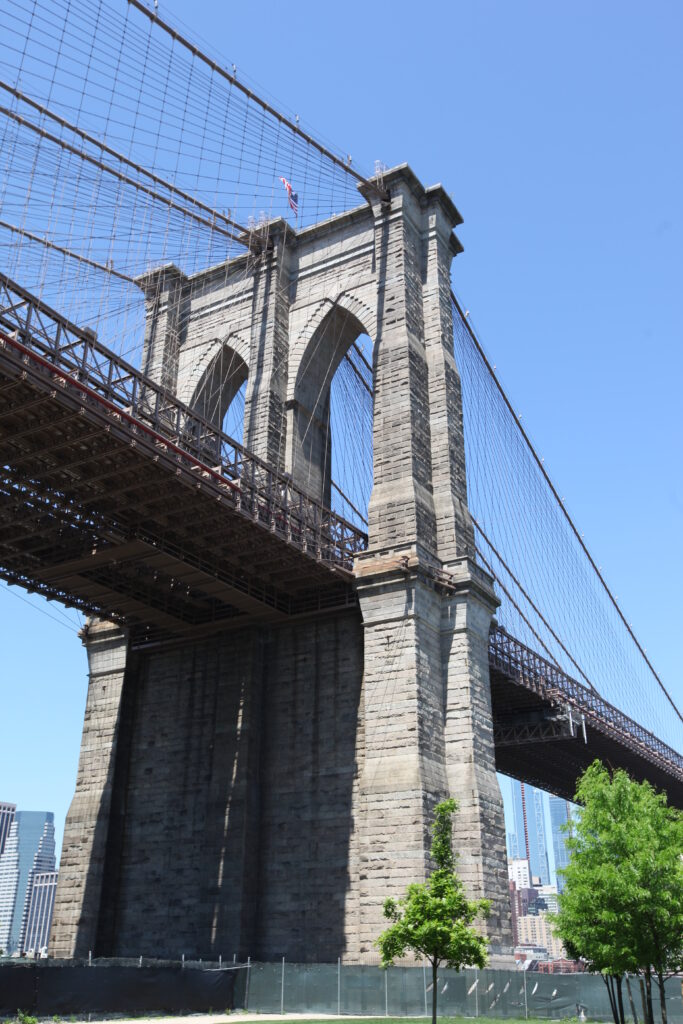
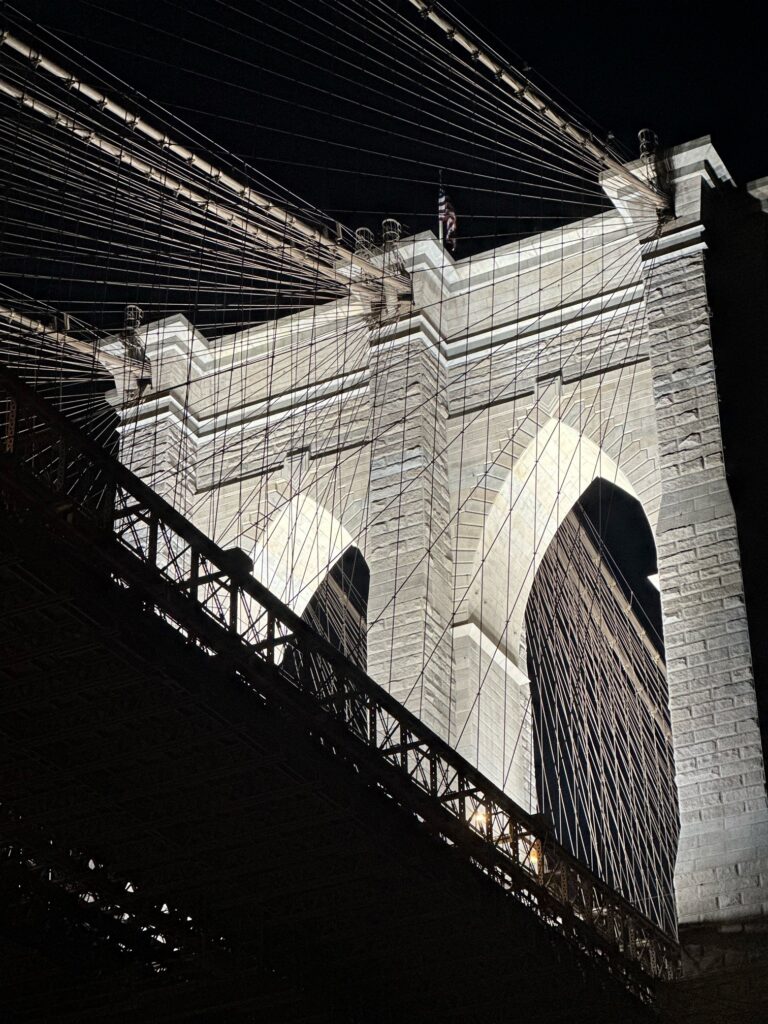
It was designated as a historic landmark in 1967. However, it would not have such universal appeal without the impressive appearance of its 272-foot-tall masonry towers. These towers have Gothic arches and graceful diagonal stay cables radiating from the top to the stiffening trusses. The bridge has become one of New York City’s and America’s most recognizable and celebrated historic landmarks.
Early Modernization And Reconstruction
Parsons has a long history of work on the Brooklyn Bridge. Our first assignment was in the 1930s and consisted of developing a plan for modernizing the structure. This was to accommodate increasing traffic loads. In the late 1940’s, we received a commission to carry out a reconstruction. This increased the highway capacity from two lanes to six lanes for modern vehicular traffic.
Through The Years: Ongoing Rehabilitation Efforts
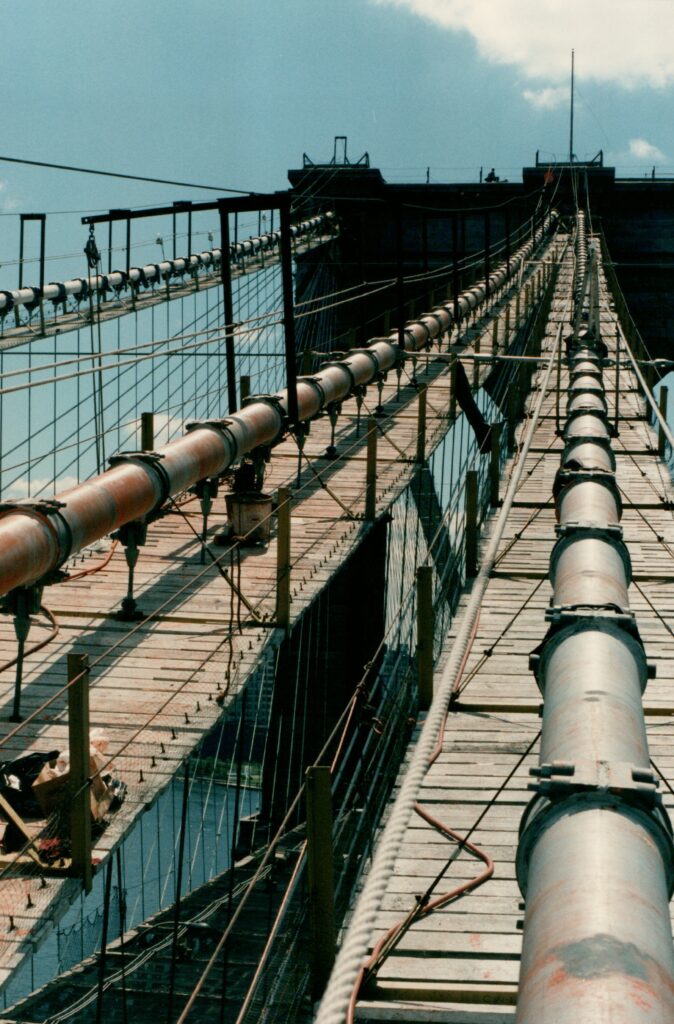
As prime consultant on a major rehabilitation program that began in 1986, Parsons has been responsible for various design and construction support services. Early contracts addressed tower protection, new signage, and promenade rehabilitation. Subsequent efforts included full-length restoration of the main cables. They also involved replacement of all suspender and stay cables, reconstruction and extension of the pedestrian walkway. Additionally, roadway and ramp repairs were made. Further work focused on rehabilitating the floor system, stiffening trusses, ramp systems, and electrical upgrades. We also installed new underdeck travelers to improve inspection access.
2004-2015: Seismic Retrofit
Between 2004 and 2015, Parsons led a comprehensive seismic assessment and retrofit of the bridge’s superstructure, towers, approaches, and caissons. This included advanced analysis, subsurface and material testing, and structural retrofits designed to meet modern seismic standards.
2016-2023: Masonry And Preservation
From 2016 through 2023, rehabilitation focused on the masonry approach arches and towers. This addressed structural deterioration while incorporating seismic retrofits such as reinforced concrete shear walls. Conservationists closely coordinated preservation efforts and the city’s Landmarks Preservation Commission maintained historic integrity.
2018-2020: Promenade Widening And Design
From 2018 to 2020, Parsons developed conceptual designs for widening the promenade. They assessed cable capacity, explored lightweight materials, and conducted environmental and historic reviews. The aim was to balance functionality with preservation.
Project Awards
In 2025, the American Council of Engineering Companies (ACEC) of New York (NY) honored our leadership as prime design consultant on the Brooklyn Bridge Rehabilitation Project with the prestigious Diamond Award in the Structural Systems category. This award represents the highest recognition given by ACEC NY and celebrates projects that demonstrate innovation, technical excellence, and benefit to the public. This award places the Brooklyn Bridge Rehabilitation among North America’s most distinguished infrastructure projects.
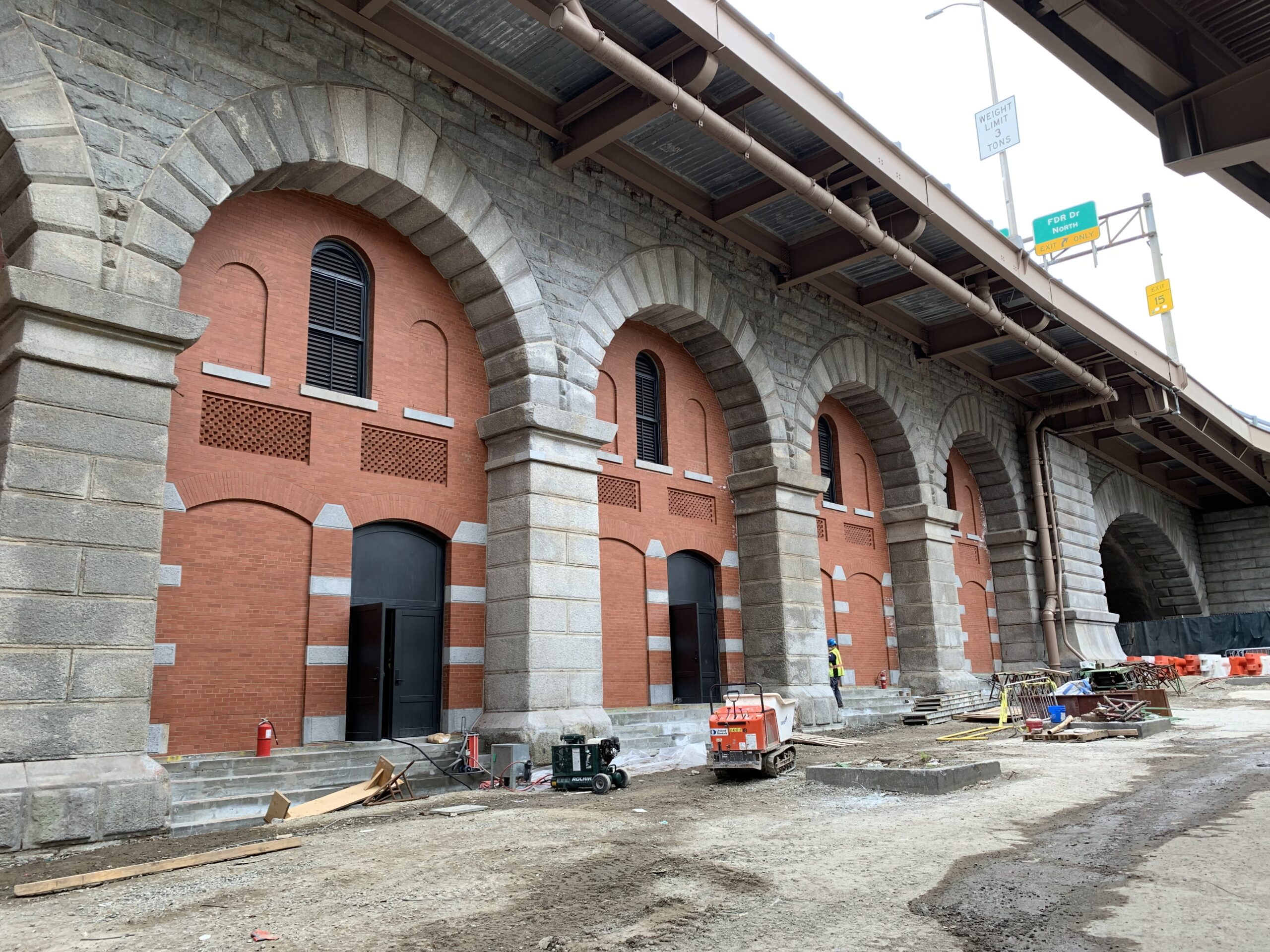
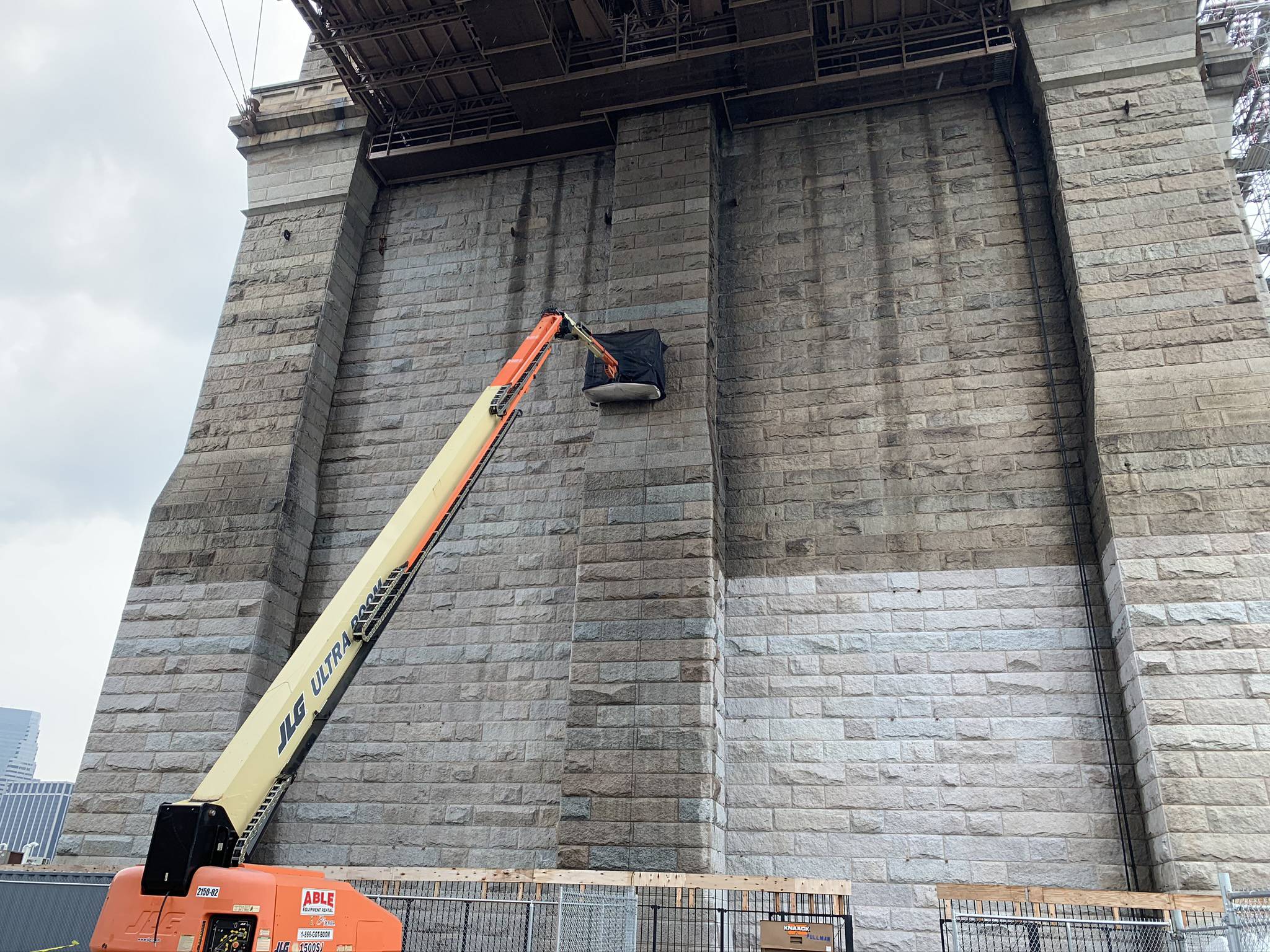
Submitted under the name The Restoration of an American Icon – The Brooklyn Bridge Rehabilitation Project, this effort brought new life to one of the nation’s most enduring landmarks. We served as lead designer on the $300 million project, which carefully restored and modernized the towers and approaches of the iconic hybrid suspension and cable-stayed structure. This structure has connected Manhattan and Brooklyn since 1883.

